
Is Split, Croatia Worth Visiting? An Honest Take (2026)
Is Split, Croatia worth visiting? Most travel blogs answer with an enthusiastic “yes!” before telling you anything useful. We’re not going to do that.
We spent our first days in Croatia in Split in September 2026. We’d absolutely go back, but there are real trade-offs you should know about before you build a trip around it. Here’s our honest take, the good and the genuinely annoying, from people who were actually there.
Wandering Everywhere contains affiliate links and is a member of Amazon Services LLC Associates Program. If you make a purchase using one of our links, we may receive compensation from the company at no additional cost to you. Read our disclaimer here.
The Short Answer
Yes, Split is worth visiting, as long as you go in with the right expectations. It’s one of the only places in the world where you can sleep, eat and wander inside a 1,700-year-old Roman palace. The food is excellent and affordable, and the city is compact and walkable. But it gets hot, it gets crowded when cruise ships dock, and some areas feel like they were built specifically for tourists.
| Split is worth it if you… | You might skip it (or just day-trip) if you… |
|---|---|
| Love history you can walk through, not just look at | Want a quiet, undiscovered town |
| Travel for food and want good value | Struggle with heat or lots of stairs |
| Like wandering without a strict plan | Dislike crowds and cruise-ship traffic |
| Want a base for islands and national parks | Prefer polished, highly organized destinations |
Pros: Why Split Is Worth Visiting
1. The history is lived-in, not roped off
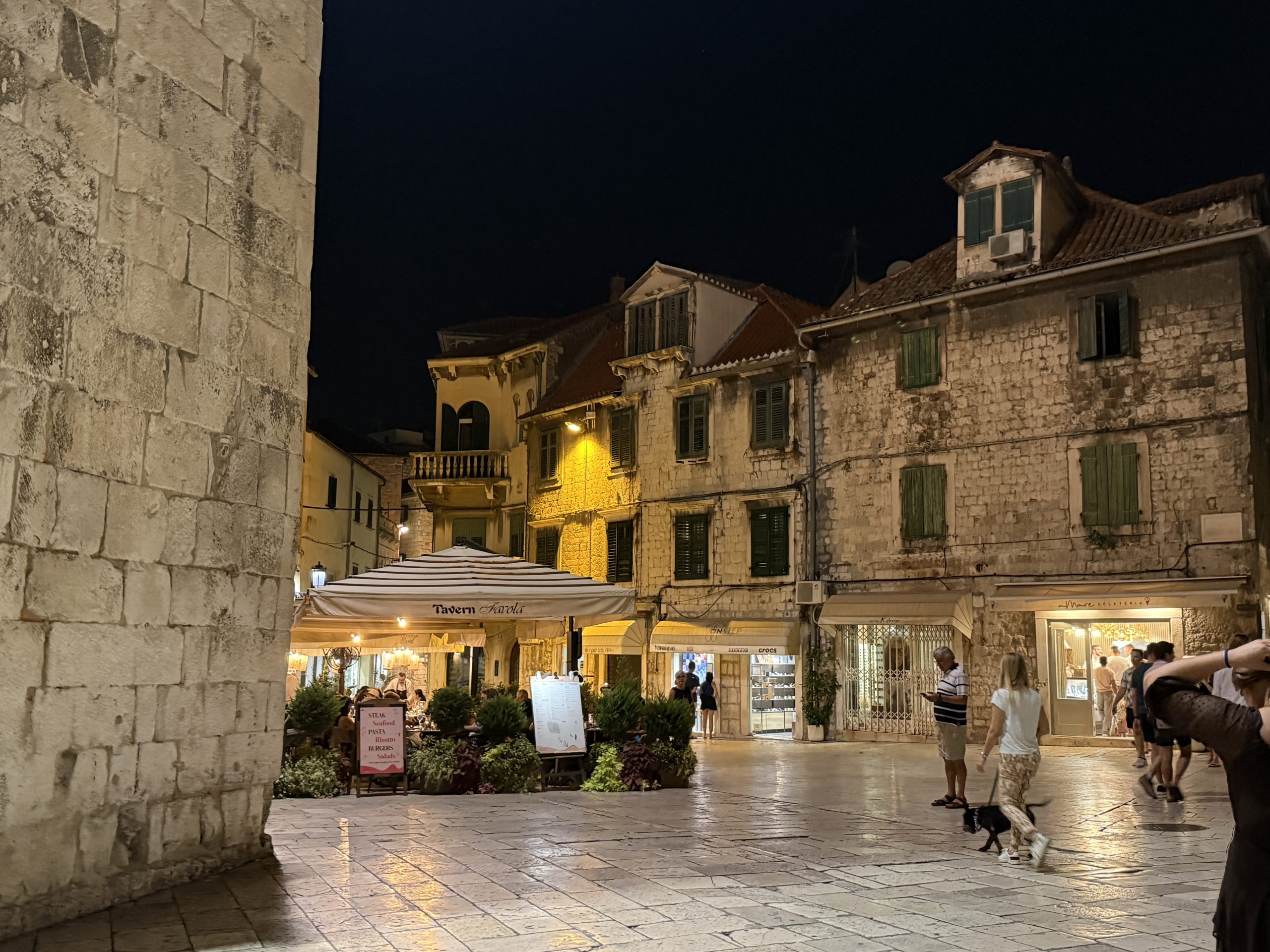
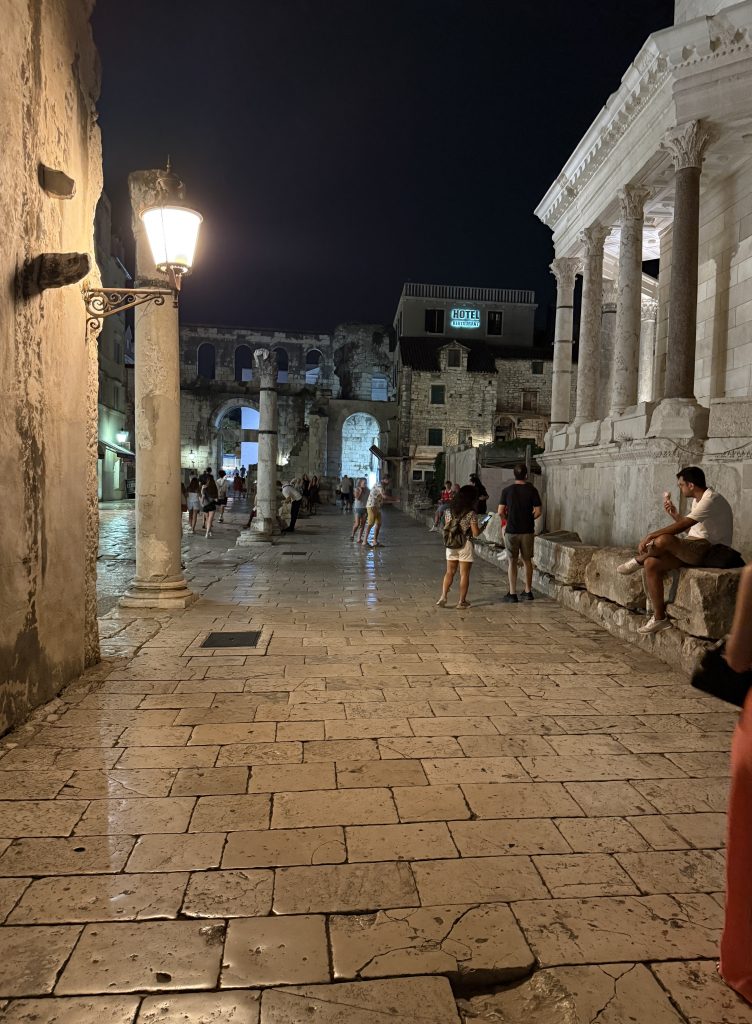
The Roman emperor Diocletian built Dioceltain’s Palace as his retirement residence around 300 AD, using gleaming white limestone from the nearby island of Brač. After he died, the complex slowly emptied, until the 7th century, when people fleeing the nearby city of Salona moved inside its walls and turned it into a town. That town grew into Split, and today the old palace is still full of life, with homes, shops, cafés and restaurants tucked into walls that are more than 1,700 years old. Emperor Diocletian’s mausoleum is now the Cathedral of St. Domnius, and the palace has been a UNESCO World Heritage Site since 1979. Today, walking through the palace is free, day or night.
Wandering it after dark was our favorite part of Split. We passed a pop-up dance festival in one square and a concert outside a church in another. It was mind boggling to see such modern day activities happening in such an old atmosphere. Very few places let you actually live (or in our case, stay) inside something this old. We stayed at Hotel Kastel 1700, right inside the Diocletian’s Palace walls, and stepping out our door into the Old Town every morning never got old.
Tip: Stay inside or just outside the palace walls to get the full experience.
2. The food is excellent, and good value
Split’s food scene delivers without draining your budget the way some European cities do. A few meals that stood out:
- Neapolitan-style pizza with a puffy crust at Sette Sorelle
- Prawn risotto at La Mia Storia, in a candlelit side-street courtyard
- Huge fresh sandwiches from a the Focaccina Sandwich Bar
Gelato was €2.80 a serving, a fraction of what the same treat costs back in the US. If food is part of why you travel, Split is worth it for this alone.

3. A short local tour expands what you can see
Booking a spontaneous tuk tuk tour was one of the best decisions of our stay in Split. In about 90 minutes, sharing with a couple we met on the spot, we saw Poljud Stadium, viewpoints most visitors on foot never reach, and a cliffside park over the water. Given our limited time, we simply wouldn’t have reached those places on our own.
If we did it again, we’d book it on day one to get the lay of the land first. That’s exactly how we lay it out in our 2-day Split itinerary.
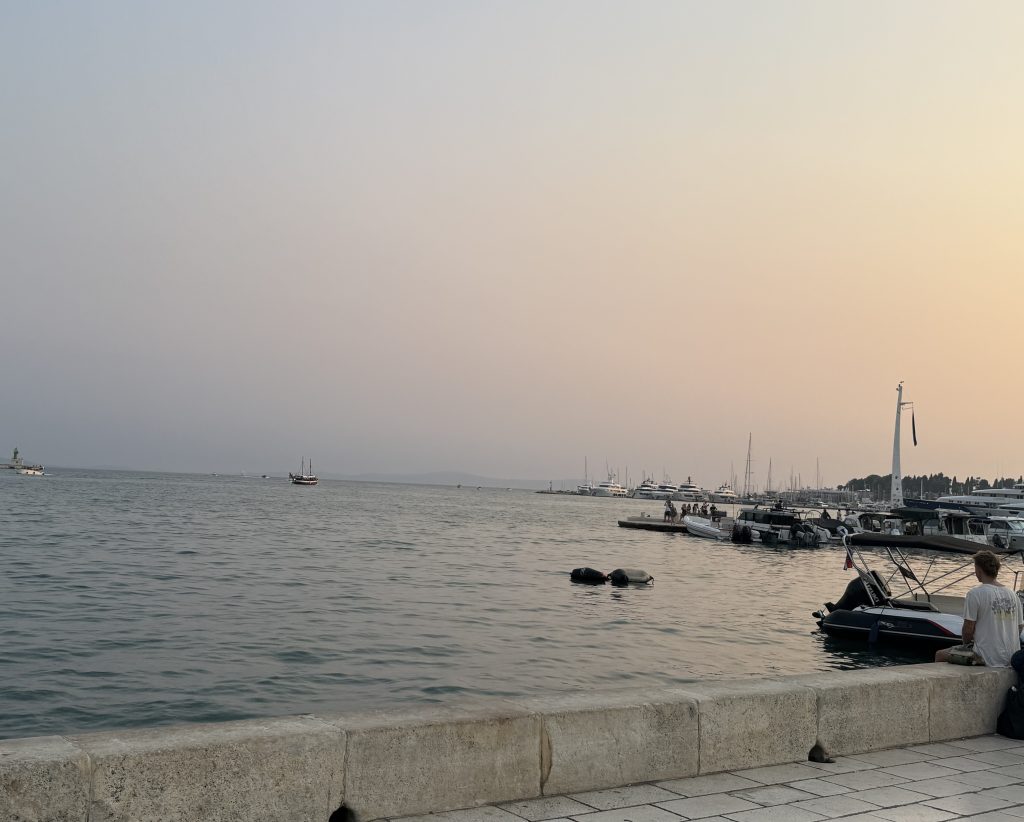
4. Sunset on the Riva lives up to the hype
Watching the sky change color from the palm-lined Riva Promenade, drink in hand, became something we very much enjoyed. It’s touristy, sure. But it’s still worth it.
5. The people make it
An Uber driver waited patiently through some airport confusion as we were trying to navigate our way to his pick up point. A tour guide happily let strangers join our tour. We even ended up helping a cruise passenger, about to turn 80, get back to her ship after she was stranded near a beach with no easy way down. Split left us with a strong impression of its people, not just the place.
6. It’s the perfect base for day trips
Split is Croatia’s main gateway to the Dalmatian Islands. Hvar, Brač and Vis are all reachable by ferry or boat tour, and Krka National Park and Trogir are an easy day trip by road. Even if the city itself isn’t your top priority, it’s hard to plan a Dalmatian coast trip without passing through.
Read more: 2 Days in Split
Cons: What Made Us Pause
1. It gets crowded, fast and predictably
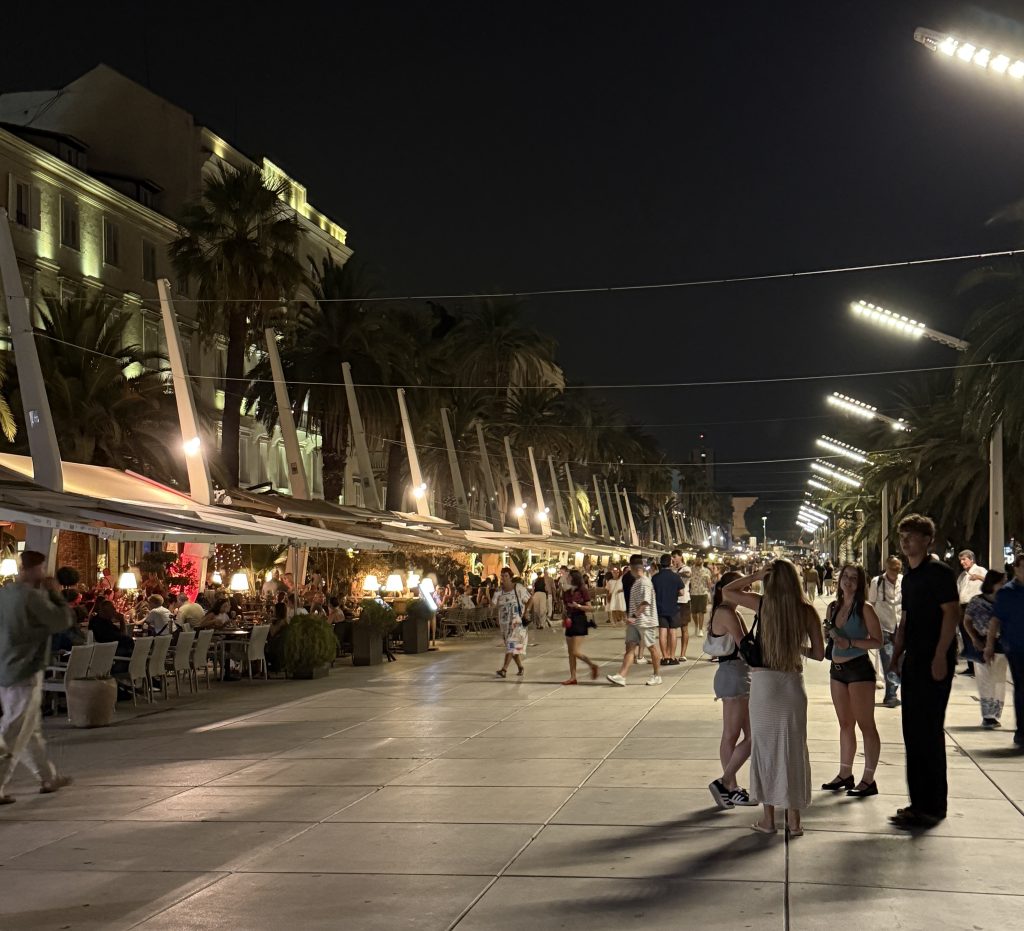
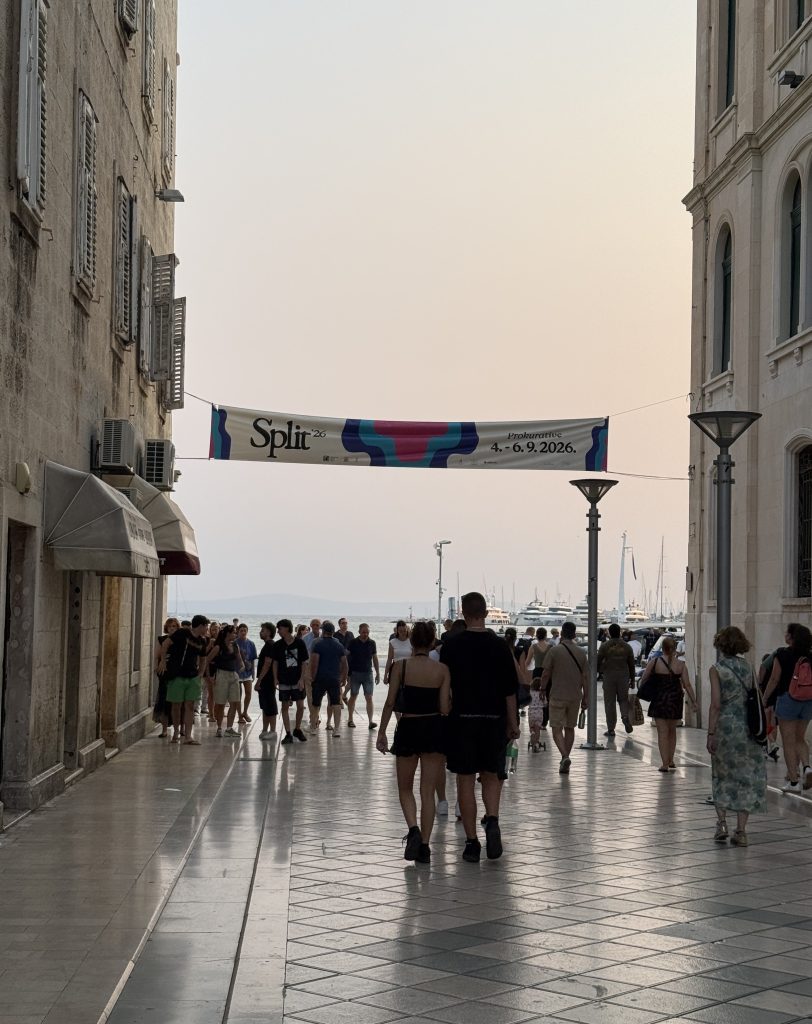
The narrow streets inside the palace walls go from pleasant to shoulder-to-shoulder the moment a cruise ship docks. If you’re picturing quiet, contemplative wandering through ancient ruins, time your visit around the port schedule or stick to early mornings and evenings. The morning after our arrival, we slept in a bit, and I want on a quick run to get coffee around the corner from our hotel. It took me alot more time than I anticipated becuase some of the small allyways on the route were wall to wall people.
2. The heat offers very little relief
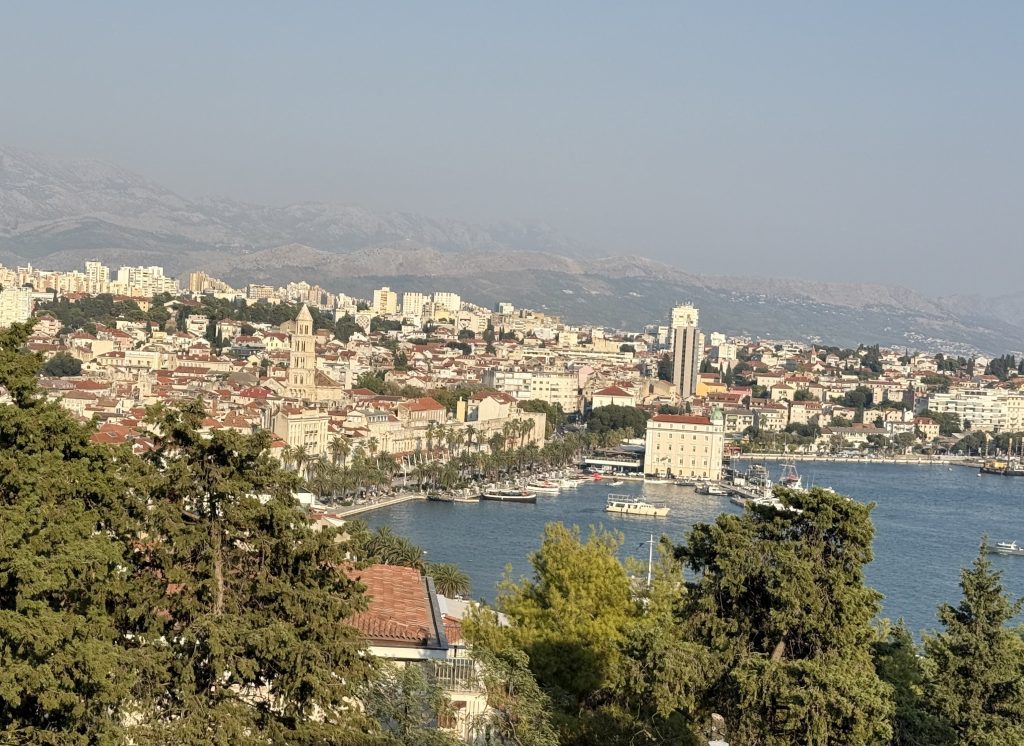
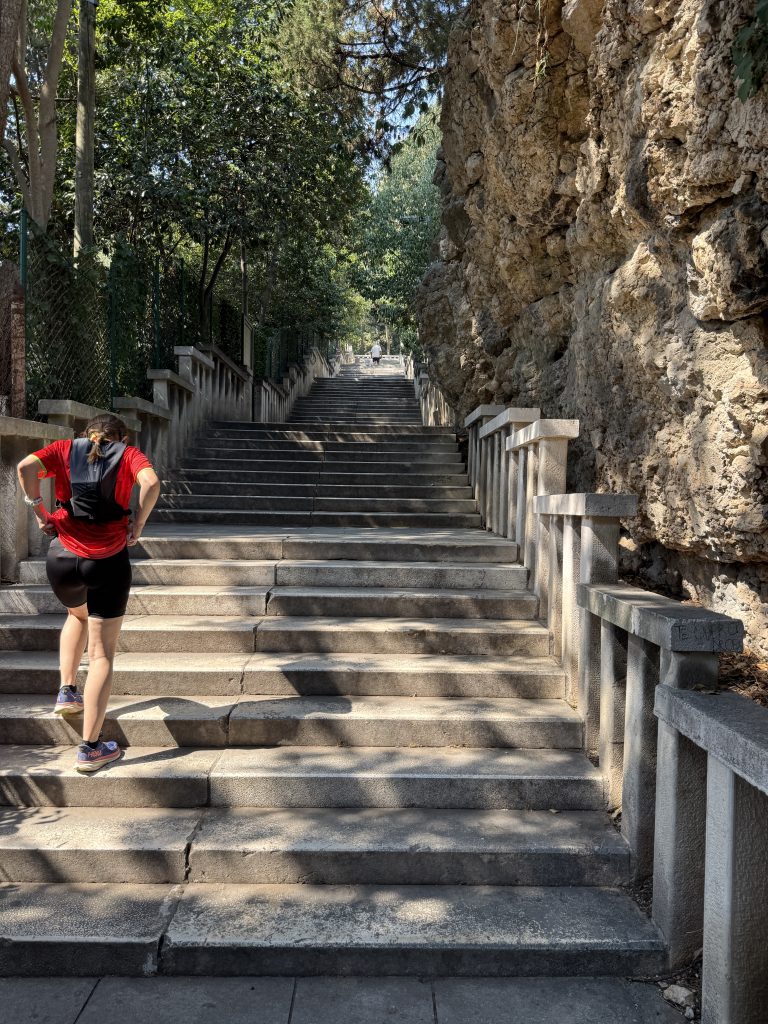
We visited in September and still found the heat intense, with little breeze and minimal shade in many areas. It was worst climbing the stairs up Marjan Hill and crossing the open stretches of the park. On the stairs there’s nowhere to refill water until you reach Teraca Vidilica, the café at the first viewpoint, and that caught us off guard.
Tip: Plan outdoor sightseeing before 10 AM or after 5 PM, carry a refillable bottle, and treat an hour back at your hotel midday as part of the plan.
3. Logistics aren’t always intuitive
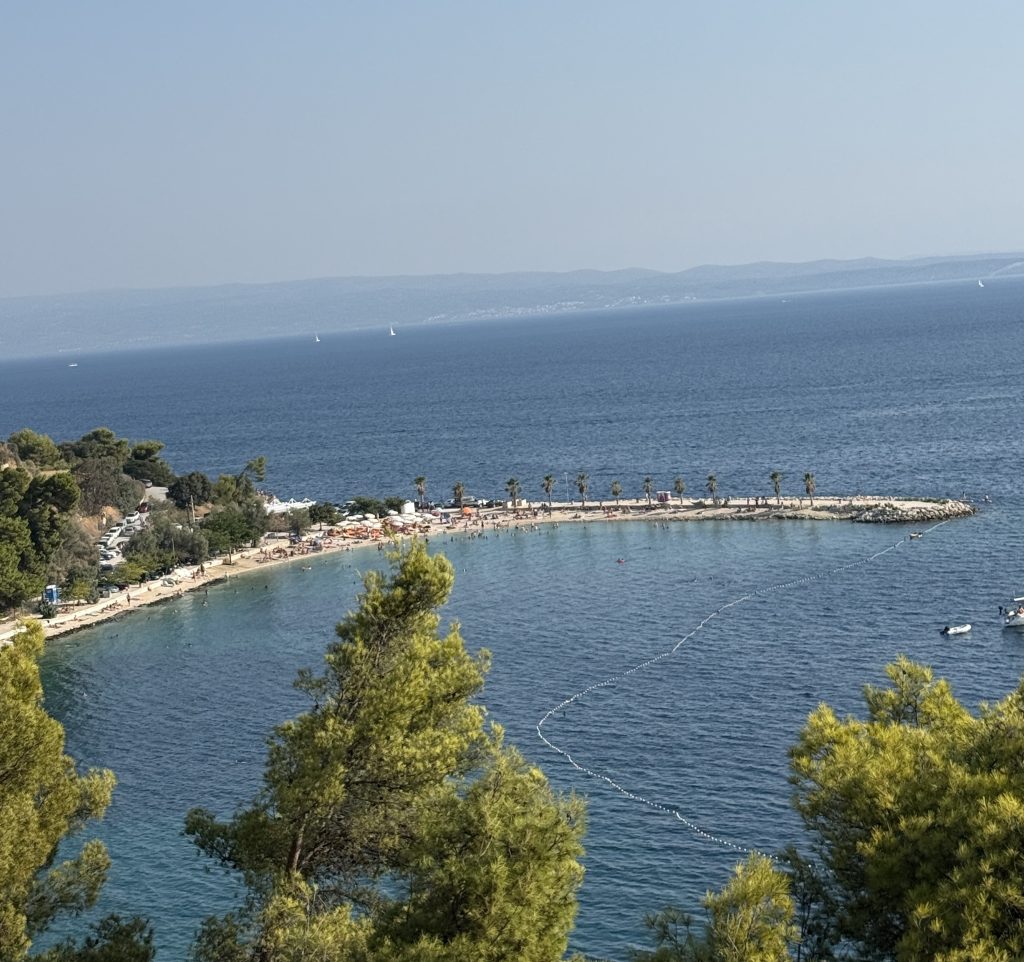
Getting from the airport to the Old Town involved more backtracking and unclear signage than we expected. We wrote a full breakdown of the airport transfer here. Finding beach access from some of the lookout points near the Old Town also wasn’t as simple as it looked on a map. None of this ruined the trip, but don’t assume everything will be clearly marked or really easy to get to.
4. Some areas feel like they were built for cruise passengers
Split has clearly adapted to high tourist volume, and in a few spots it shows. You will find costumed street performers and souvenir-heavy stretches near the water. For a moment, parts of the ancient city can feel like a theme park. It doesn’t dominate the experience, but it’s there.
Split vs. Dubrovnik: Which Is More Worth It?
If you’re choosing between Croatia’s two most famous coastal cities, here’s how they compare:
| At a glance | Split | Dubrovnik |
|---|---|---|
| Feel | Lived-in, local city built into a Roman palace | Polished, walled medieval showpiece |
| Crowds | Busy in bursts when cruise ships dock | Famously crowded in peak season |
| Cost | Better value for food and stays | Generally pricier |
| Best for | Food, history, island-hopping base | Iconic walls, views, Game of Thrones fans |
Our take: If you can, do both. They’re known for very different experiences. If you have to choose one base, Split gives you more flexibility for day trips.
We visited Dubrovnik later on during our trip. There were some similarities between the cities, but they were both very different and both worth visiting.
Read more: Things to Do in Dubrovnik
How Many Days Do You Need in Split?
- 1 day: Enough to see Diocletian’s Palace and the Riva. It’s rushed, but doable as a day trip.
- 2 days: The sweet spot for Split itself. It gives you enough time to take a local tour, see the palace, Marjan Hill and have a couple of great dinners. See our 2-day Split itinerary for exactly how to spend it.
- 3 days: Adds a day trip to Hvar, Krka National Park or Trogir.
Is Split Expensive?
Not particularly, especially compared to Western Europe. Here’s what our 2 days in Split cost the two of us:
| Expense | What we paid |
|---|---|
| Airport Uber | €38.18 + tip |
| 90-minute tuk tuk tour | €60 per couple + tip Shared a 4-person tuk tuk |
| Pizza dinner for two with cocktails | €51.60 |
| Cathedral + bell tower combo tickets | €24 for two |
| Focaccia lunch for two | €23.65 |
| Risotto dinner for two with beers | €40.56 |
| Gelato | €2.80 per serving |
| Total out of pocket | €247.79 plus tips and gelato (hotel not included) |
Tip: Your hotel is the biggest cost in Split, which makes it the best place to use travel points. Book well in advance for the best options and rates. We booked with American Express points and paid only the €10 in fees at checkout.
Airport transfers and hotel shuttles are where costs can creep up, so compare options before you book. See the full breakdown in our 2-day Split itinerary.
Best Time to Visit Split
Late May – June and mid-September through early October give you warm sea temperatures with fewer crowds than July and August. Even in the first part of September, expect intense midday heat, so plan your days around it.
So, Is Split Worth Visiting? Our Verdict
Yes, but go in with realistic expectations. Be happy to get a little lost inside the palace walls, be prepared to handle some heat and crowds in exchange for unique history, excellent food and a walkable city center.
It’s not a quiet, undiscovered secret. If that’s what you want, base yourself in a smaller town nearby, like Trogir, and visit Split as a day trip. But as a place to spend two or three days in history that’s lived in rather than behind glass, we’d go back without hesitation.
Ready to start planning? Here’s a map of where to stay in Split based on what worked for us.
FAQ: Is Split, Croatia Worth Visiting?
Is Split worth visiting if I’ve already been to Dubrovnik?
Yes. Split has a very different feel. Split is less polished and more lived-in. Diocletian’s Palace is somewhere you actually walk through and stay inside, rather than a fortified perimeter you tour.
How many days do you need in Split?
Two days covers the core sights and a local experience like a tour. A third day opens up day trips to Krka National Park or the islands.
Is Split too touristy to be worth visiting?
It can feel that way in specific areas or streets, especially when cruise ships are in port or along the most photographed stretches of the Riva. But wander even one street off the main paths and you’ll find a much quieter, more authentic city.
Is Split expensive?
Not especially. Our 2 days cost about €248 out of pocket for two, excluding tips and gelato, because we used points for our hotel. Food and gelato were noticeably cheaper than US prices, and a shared tour was very reasonable.
Is Split safe for tourists?
We felt safe walking through the palace and along the Riva late at night. As in any busy tourist area, keep an eye on your belongings in crowds, especially when cruise ships are in port.
Is Split worth visiting in September?
Yes. The crowds are smaller than in July and August, and the sea is still warm for swimming. Just expect hot afternoons, at least in the first few weeks of September. We found the afternoon heat to be intense, even in September.
Wrapping Things Up: Is Split Worth It?
Split isn’t a perfect, undiscovered gem, and any post that tells you otherwise probably hasn’t spent real time there. It’s hot, it’s crowded in predictable bursts, and many stores and stops lean into the tourist spectacle. But it’s also a city where history can be seen everywhere, where a spontaneous tour or a wrong turn can become the best part of your trip, and where the food alone might be worth the visit.
Is Split worth visiting? We’d go back, and we’d tell you to go too. Just pack water, sunscreen and a little patience for the crowds.
Planning your trip to Split?
