
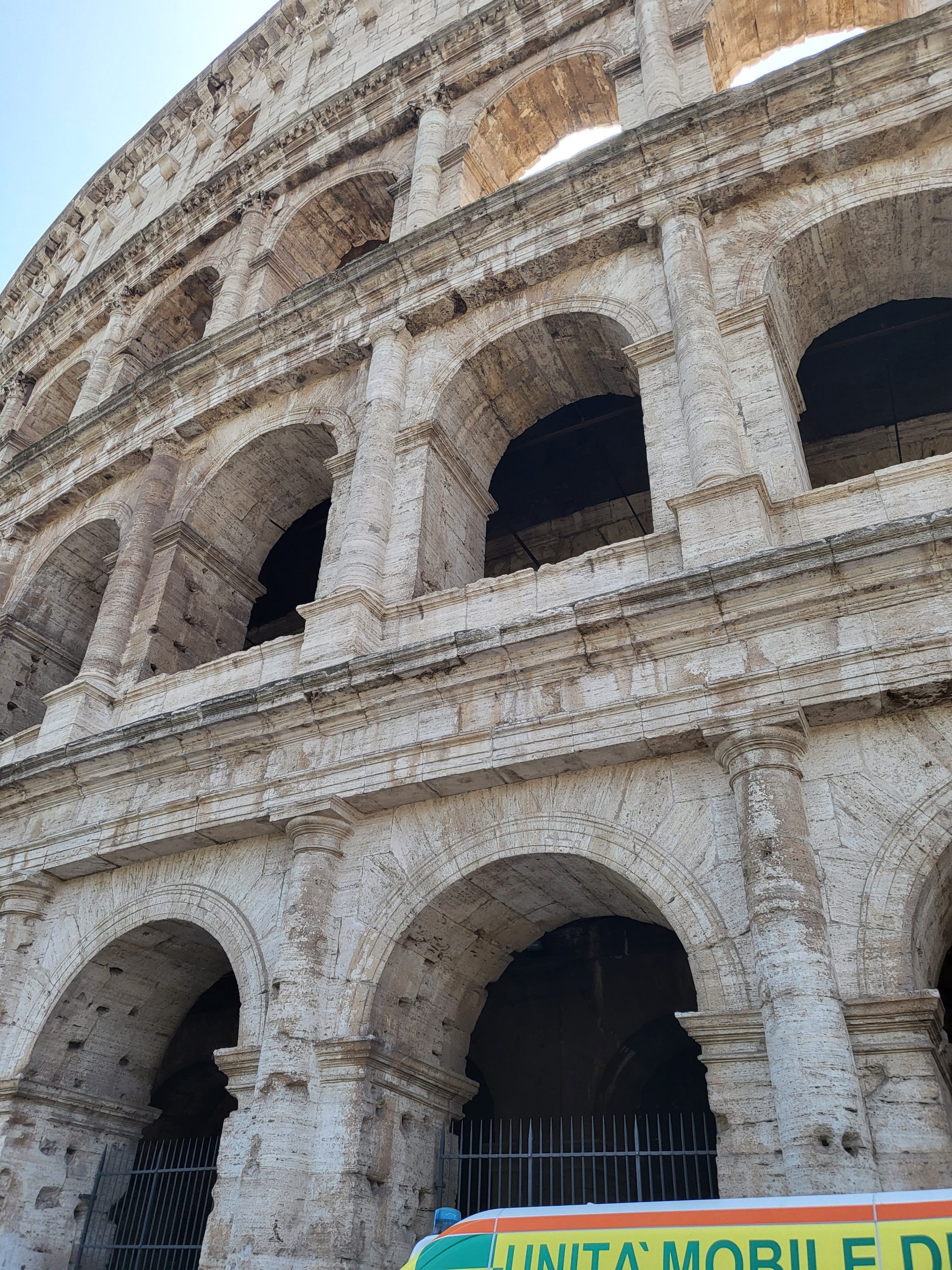
How Many Days in Rome Do You Actually Need? (+ a Complete 3-Day Itinerary)
Quick Answer:
Three days are the recommended minimum for a first-time visitor to Rome. Two days is possible with careful planning but it’ll feel rushed. Four to five days is the ideal length if your schedule allows.
The first thing Rome did to me was make me feel stupid for thinking I’d planned it properly.
I’d mapped out a logical 72-hour itinerary with the Colosseum on the first morning, Vatican second, historic center third, with everything pinned and timed. Then I turned onto Via della Morte Oscura near the Circus Maximus on day one and walked straight into a 2,000-year-old wall that wasn’t in any guidebook, with an elderly man sitting beside it eating a panino as if it were a park bench. That was the end of my schedule. I was quick to find out that Rome does this constantly.
I’ve spent ample time traveling through Italy and around Europe, which means I’ve sat across from dozens of people asking the same question before their trips, ” how many days in Rome do I actually need?” The honest answer is that you could fill a week without trying. But for a first visit, three days is the sweet spot. It’s long enough to cover the best things to do in Rome without the rushed, box-ticking feeling that ruins a good trip.
In this guide I’ll break down exactly how long to spend in Rome depending on your schedule, covering one, two, three, four, or five-to-seven days. We’ll give you a complete Rome in 3 days itinerary to follow, share the Rome travel tips you need on tickets and logistics, and tell you where to stay at every budget. By the end, you’ll know precisely how to plan your time.
Wandering Everywhere contains affiliate links and is a member of Amazon Services LLC Associates Program. If you make a purchase using one of our links, we may receive compensation from the company at no additional cost to you. Read our disclaimer here.
Planning a wider Italy trip? My Verona, Cinque Terre, and Milan guides pair beautifully with a Rome visit for a full northern-to-southern Italian adventure.
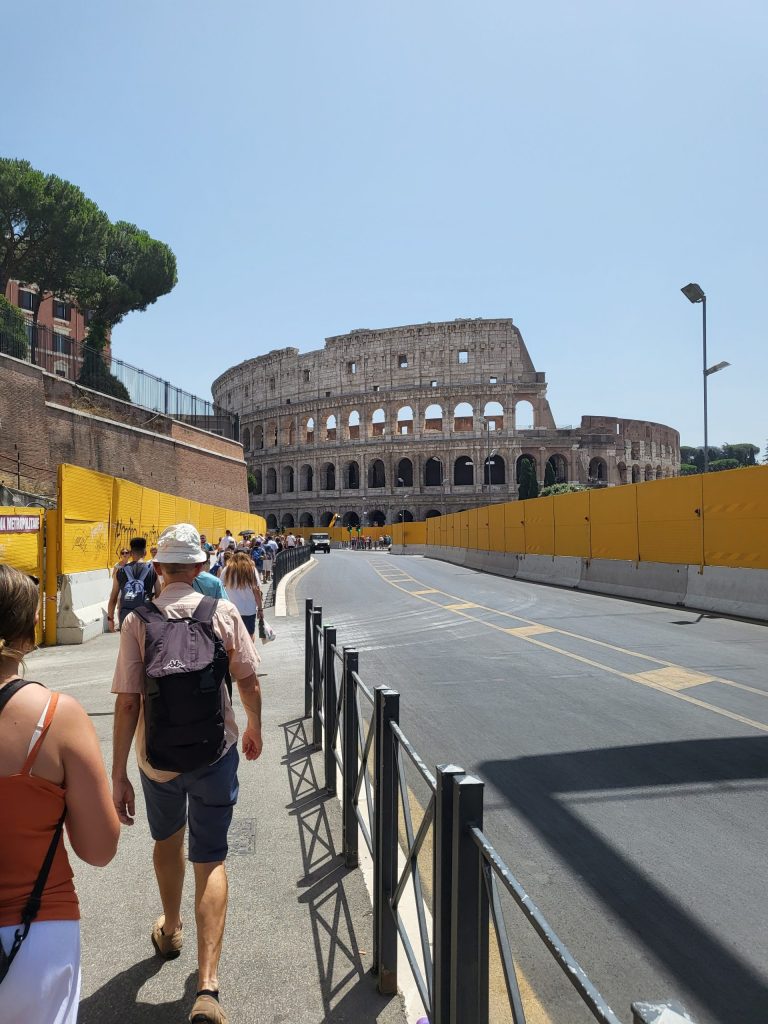
How Many Days in Rome?
The most honest answer to how long to spend in Rome is that three days is the recommended minimum for a first-time visitor who wants to see Rome’s headline attractions without feeling too rushed. Two days is doable with careful planning but tight. Four days allows a genuinely relaxed pace with time for neighborhoods, a possible day trips, and the unexpected diversions that make Rome special.
Here’s how each length of stay breaks down in practice:
| Length of Stay | What You Can Realistically See |
| 1 day | The Colosseum & Roman Forum OR Vatican Museums & St. Peter’s (but not both comfortably). A long but memorable and exhausting day. |
| 2 days | Colosseum, Roman Forum, Palatine Hill on Day 1. Vatican, Pantheon, Trevi Fountain, Piazza Navona on Day 2. Tight but very achievable. |
| 3 days ★ Recommended | All of the above at a comfortable pace, plus time to explore Trastevere, Campo de’ Fiori, the Monti neighborhood, and enjoy Roman food properly. |
| 4 days | Everything in 3 days plus the Borghese Gallery, day trips to Tivoli or Ostia Antica, and the slower, more local Rome. |
| 5–7 days | All of the above, plus a full day at the Borghese Gallery and Villa Borghese gardens, a day trip to Tivoli (Hadrian’s Villa + Villa d’Este), deeper neighborhood exploration of Prati and Pigneto, and the kind of unhurried market mornings and long Sunday lunches that make Rome feel like yours. |
For this guide, I’ve built a 3-day itinerary which covers all of Rome’s essential experiences while leaving room to breathe. If you only have two days, simply combine Days 1 and 2 by cutting the afternoon wandering. If you have four, add the Borghese Gallery on Day 4 (reservation required well in advance). If you have five to seven days, keep reading, there’s a dedicated section below.
💡 Pro tip: Book all major tickets such as the Colosseum, Vatican Museums, and Pantheon, before you leave home. The Colosseum regularly sells out weeks in advance, especially in spring and summer. Walking up without a ticket in peak season means standing in an enormous line or being turned away entirely.
Does the Answer Change by Season?
Yes, and this is the part most Rome guides skip. “Three days” means something very different in April than it does in August. The heat, the crowds, and even how far you’ll want to walk each day all shift the calculus.
| Season | Months | Weather | Crowds | Effect on Day Count |
|---|---|---|---|---|
| 🌸 Spring | Late Mar–May | 14–24°C (57–75°F), mostly dry | High, rising fast toward May | 3 days feels comfortable; this is peak “sweet spot” weather |
| ☀️ Summer | Jun–Aug | 25–35°C (77–95°F), brutal midday sun | Maximum — expect real lines everywhere | 3 days can feel like 4 worth of effort; build in siesta time |
| 🍂 Fall | Sep–Nov | 15–27°C (59–81°F), golden light | High in Sept, thinning by Nov | 3 days works great; October is arguably the best month to do this itinerary |
| ❄️ Winter | Dec–Feb | 4–14°C (39–57°F), occasional rain | Lowest of the year (except Christmas week) | 3 days is easy, even relaxed; you could realistically add a 4th day for the price of one summer day |
💡 Pro tip: If you’re flexible on dates, this is the single easiest way to make a 3-day trip feel like a 4-day trip is not by adding time, but by removing the heat and queue-fatigue that eat into your energy in June through August.
Spring (Late March–May): The Benchmark Itinerary Season
This is the season the 3-day itinerary above was basically built for. Mild temperatures, manageable (if growing) crowds, and long enough daylight to fit an evening aperitivo after a full sightseeing day. The one asterisk: Easter week draws a domestic and international crowd spike that can rival summer, so if your dates land near it, treat this post’s “2 days is tight” warning as doubly true.
Summer (June–August): Same 3 Days, More Effort
You can absolutely still do this itinerary in 3 days in summer, plenty of people do, but be honest with yourself about pacing. Midday heat at an unshaded site like the Roman Forum or Palatine Hill is genuinely draining, not just uncomfortable. If you’re visiting July or August, consider:
- Starting even earlier than this guide recommends (Colosseum at opening becomes non-negotiable, not optional)
- Building in a 2-3 hour midday break, the way Romans actually do
- Treating August 15 (Ferragosto) as a wildcard because many family-run restaurants and some shops close for the holiday, so don’t count on your Day 1 or Day 3 trattoria pick being open without checking ahead
🚨 Heads up: This is also why the “4 days in Rome feels excessive” comments in our FAQ almost always come from August travelers. It’s not that 4 days is too long, it’s that summer Rome makes 3 days feel like enough on its own.
Fall (September–November): The Quiet Favorite
September still runs hot and crowded through the first couple weeks, but by late September into October, this becomes arguably the best possible window to run this exact 3-day itinerary. It is warm enough for outdoor dining, cool enough for a full day on your feet at the Vatican, and noticeably thinner lines than summer. November trades a little weather reliability (it’s Rome’s rainiest month) for the lowest crowds of the shoulder seasons. It’s a fair trade if you don’t mind packing a rain jacket.
Winter (December–February): The Same Itinerary, No Compromises
Winter is Rome’s most underrated season for exactly this 3-day plan. Sites you’d otherwise fight crowds for like the Colosseum, the Vatican Museums, even the Trevi Fountain at midday, are dramatically calmer, and hotel prices in the Where to Stay section above often drop below even the budget-range estimates. The trade-off is purely weather: pack layers, expect the occasional rainy day, and know that December brings a genuinely festive (if crowded) Christmas market atmosphere around Piazza Navona that’s worth building an evening around.
Rome in 3 Days: The Complete First-Timer’s Itinerary
This Rome in 3 days itinerary is designed for anyone visiting Rome for the first time who wants to see the most important things to do in Rome without sacrificing the wander time that makes the city feel like Rome. Each day has a geographic logic so you won’t be crossing the city back and forth.
Day One: Ancient Rome – The Colosseum, Roman Forum & Palatine Hill
There’s a reason every Rome itinerary starts here. The Colosseum is Rome’s most iconic monument and the entry point for understanding what this city was. Give Day 1 entirely to ancient Rome, you’ll definitely have enough sites to fill your first day.
Morning: The Colosseum & Roman Forum
Arrive at the Colosseum at opening (9:00 AM) with a pre-booked timed entry ticket. The morning light on the travertine stone is extraordinary, and the crowds are thinner than at any other point of the day.
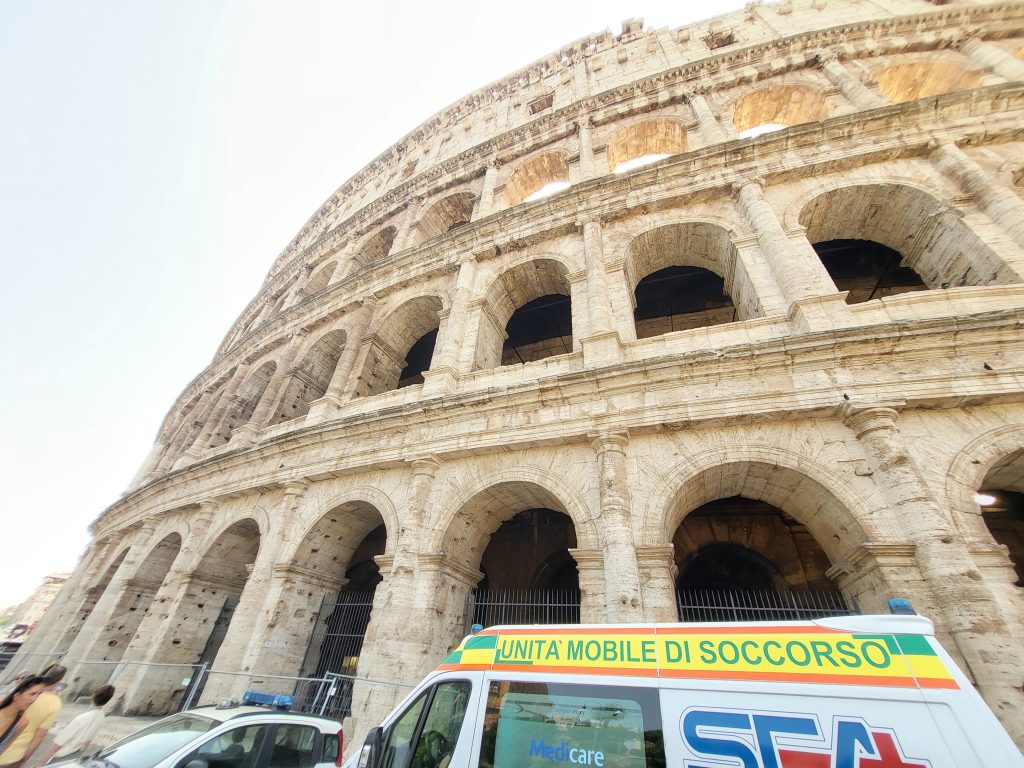
The Colosseum was completed in 80 AD and could hold up to 50,000 spectators. Standard admission is currently €18 per adult, free for children under 18 and includes the Roman Forum and Palatine Hill on the same ticket. Allow 90 minutes to two hours inside. Skip the line tour tickets are well worth the money**
From the Colosseum, walk directly to the Roman Forum, which was the beating heart of ancient Roman public life for over a thousand years. The ruins of temples, basilicas, and triumphal arches stretch across the valley below the Palatine Hill. Allow another 90 minutes here.
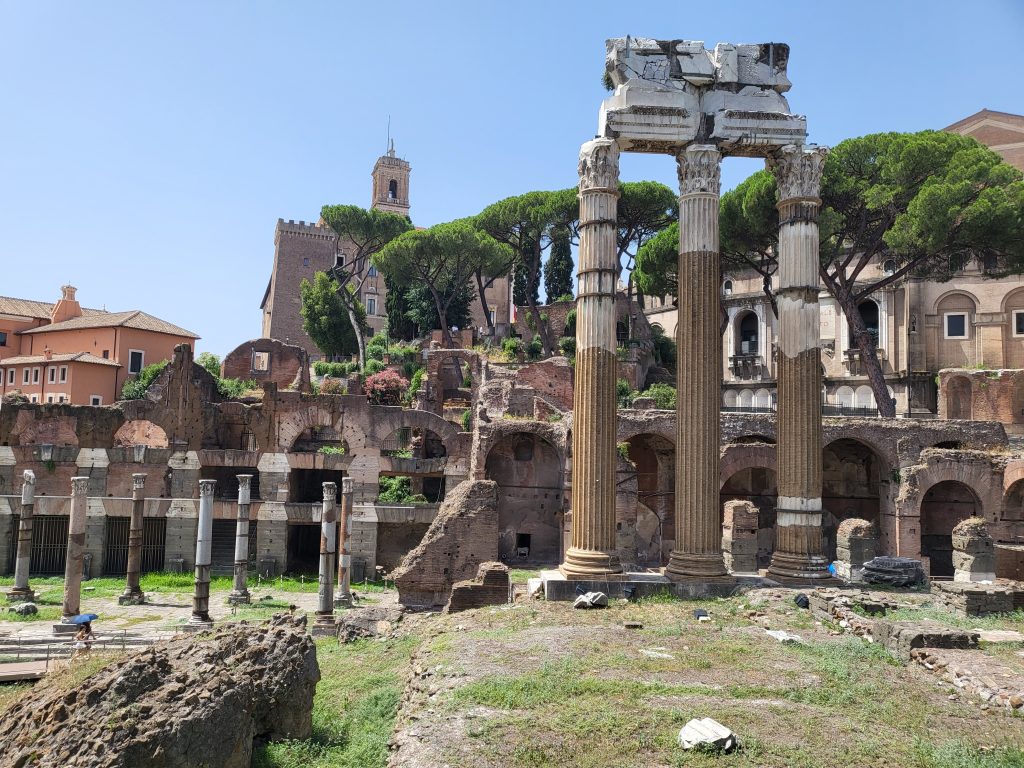
↗️ Book The Colosseum Here:
Colosseum + Roman Forum + Palatine Hill tickets are available on the official site (ticketing.colosseo.it) or via GetYourGuide for guided tours with skip-the-line access.
Afternoon: Palatine Hill & the Monti Neighborhood
After the Forum, climb Palatine Hill which is the legendary birthplace of Rome, where emperors built their palaces. The views over the Forum from the top are among the best in the city. Allow an hour here.
By mid-afternoon you’ll be ready for a slower pace. Walk 10 minutes to the Monti neighborhood. This is Rome’s most charming district, full of independent wine bars, great restaurants, and locals who actually live here. Grab lunch at one of the trattorias around Piazza della Madonna dei Monti.
📍 Where is Monti? Monti sits directly between the Colosseum and the Pantheon. You can walk to both in under 15 minutes, which makes it one of the best-located neighborhoods in the city.
Evening: Aperitivo in Testaccio or Trastevere
End Day 1 in Testaccio, Rome’s former meatpacking district turned food neighborhood, or cross the Tiber to Trastevere. Here you’ll find narrow medieval streets, ivy-covered buildings, and the best aperitivo scene in the city. This is Rome at its most local and most beautiful after dark.
Classic Roman dishes to order include; cacio e pepe (pasta with pecorino and black pepper), supplì (fried rice balls), and pizza al taglio (pizza sold by weight). Save carbonara and coda alla vaccinara for Testaccio, where they were invented.
Day Two: Vatican City – Vatican Museums, Sistine Chapel & St. Peter’s Basilica
Vatican City is technically the world’s smallest independent state, but it contains some of the most important art and architecture ever created. Give it the full day. The Vatican Museums alone have 54 galleries. You won’t see everything, but you’ll see enough to understand why people return for a lifetime.
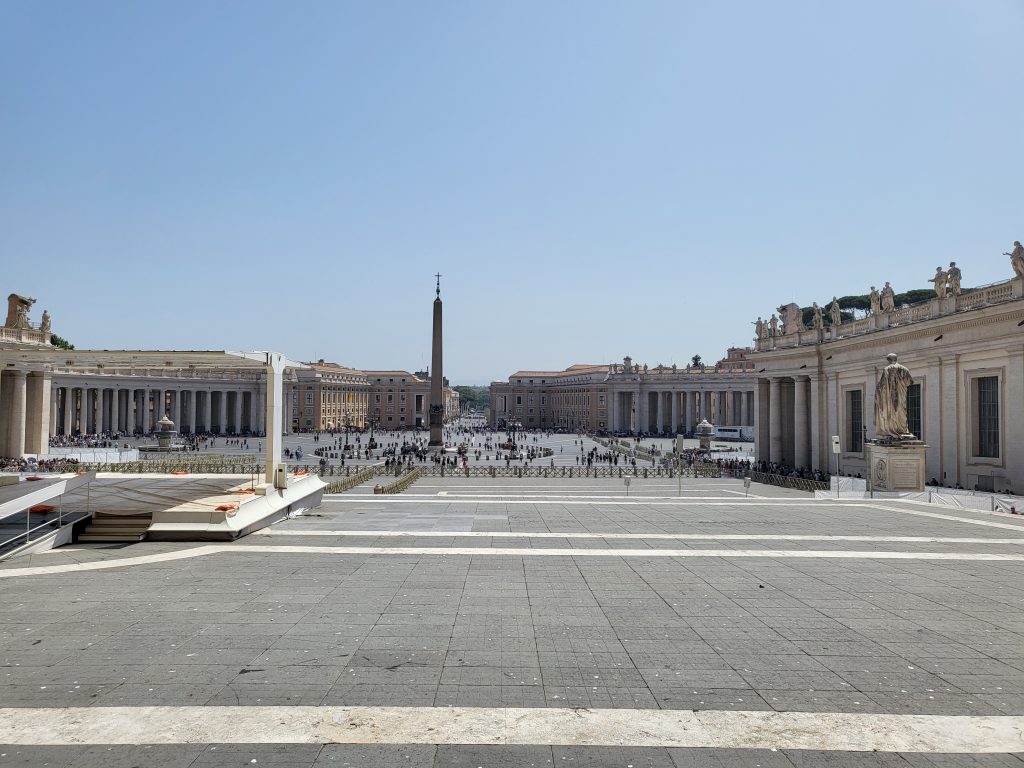
Morning: Vatican Museums & Sistine Chapel
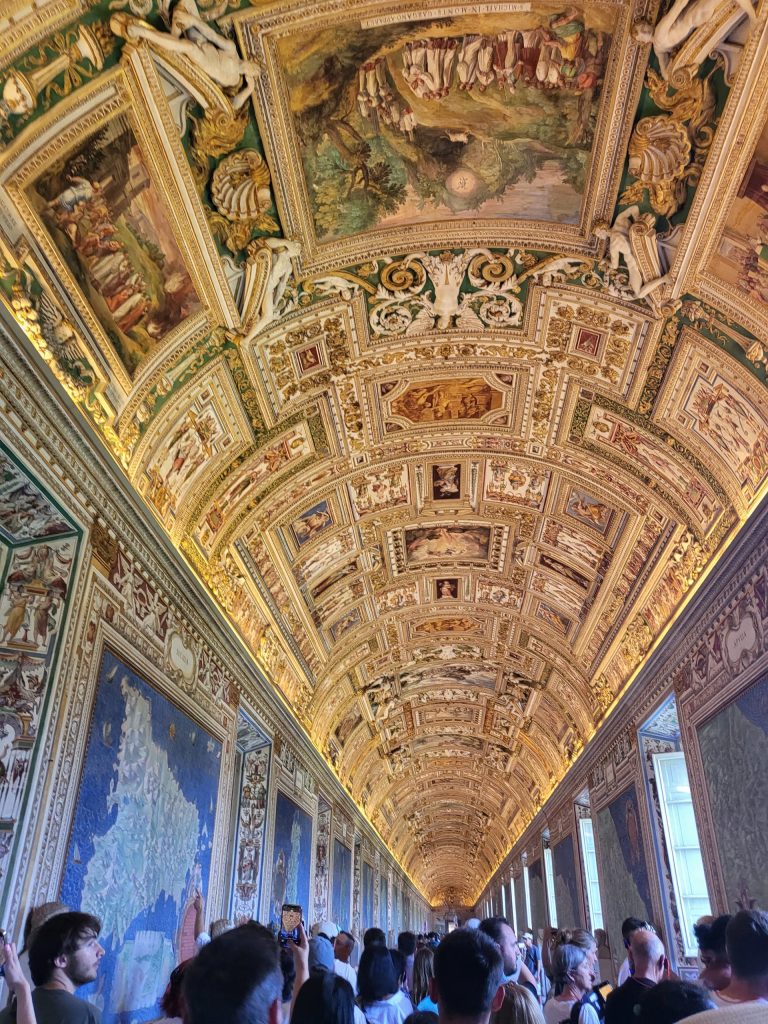
Begin at the Vatican Museums with a pre-booked timed entry ticket (standard admission is currently €20 per adult without online booking, plus €5 for online skip-the-line booking via the official site museivaticani.va). Arrive at your booked entry time and head straight for the Sistine Chapel before the crowds build.
The Sistine Chapel ceiling, painted by Michelangelo between 1508 and 1512, is the reason you’re here. The Last Judgment on the altar wall was completed 29 years later, in 1541. Photography is not permitted inside the chapel. Allow two to three hours for the museums and chapel combined.
📸 Note: Silence must be observed inside the Sistine Chapel. Photography and mobile phone use are strictly prohibited.
↗️ Book a Guided Tour of the Vatican Here:
Vatican Museums, Sistine Chapel & St. Peter’s Basilica Guided Tour
We found that booking a guided tour helped us to better navigate the crowds and manage our time in Vatican City. However, you will not have as much time to explore the museums as you would if you want without a guided tour.
Afternoon: St. Peter’s Basilica & St. Peter’s Square
Entry to St. Peter’s Basilica is free, but advance booking is recommended to avoid queues. Don’t miss Michelangelo’s Pietà (1499) in the first chapel on the right, and Bernini’s extraordinary baldachin canopy over the papal altar.
Climbing the dome (€8 with stairs, €10 with elevator to the drum) gives panoramic views over Rome that rival anything the city offers. Allow 30 to 45 minutes. Modest dress is required, so make sure your shoulders and knees are covered.
Evening: Campo de’ Fiori & the Historic Center
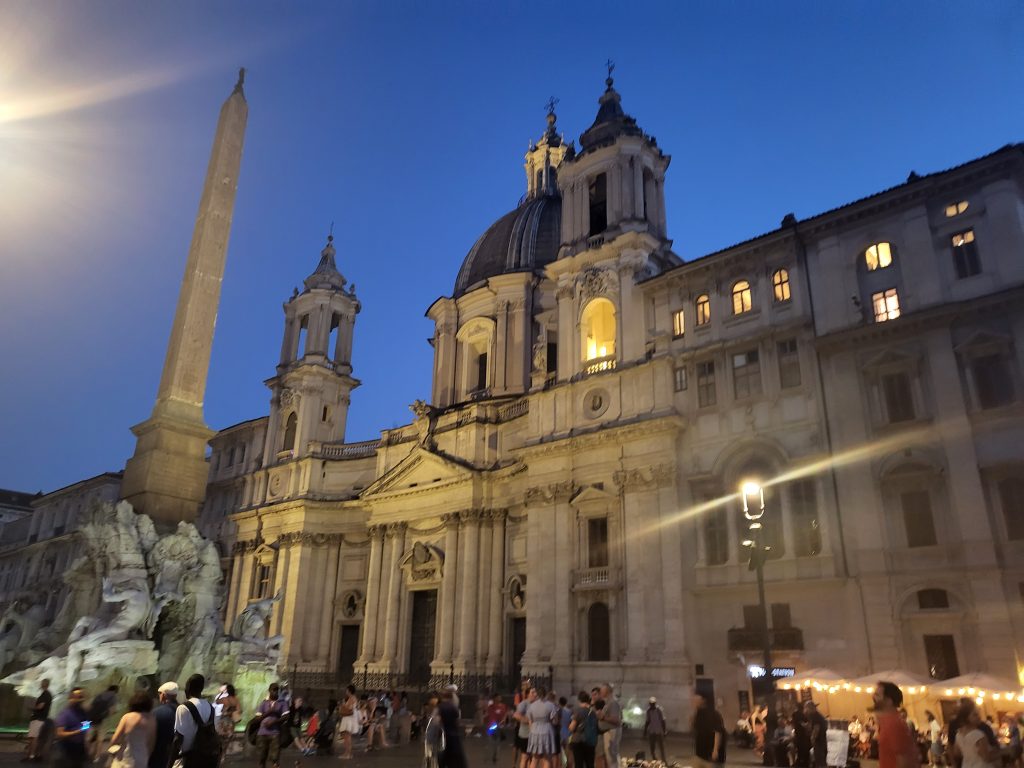
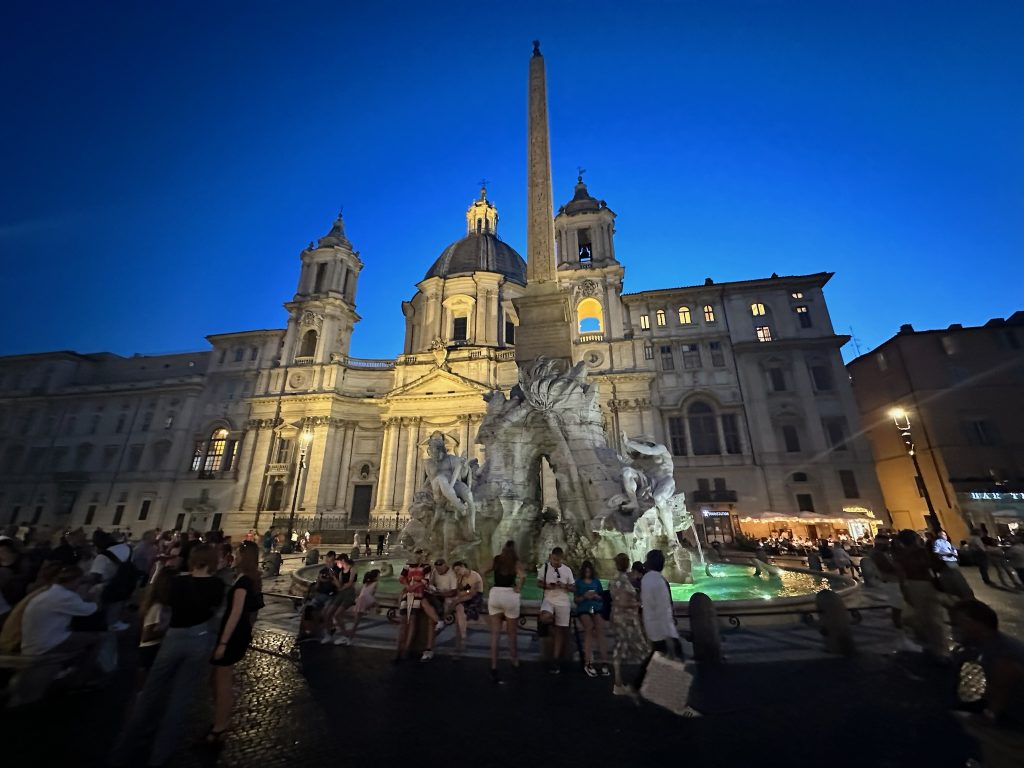
Cross back to the historic center for the evening. Campo de’ Fiori transforms from a daytime market square into one of Rome’s most lively evening destinations. After dinner, follow the Heart of Rome walk. Start at Campo de’ Fiori → Piazza Navona (Bernini’s Fountain of the Four Rivers is spectacular at night) → the Pantheon area.
Day Three: The Historic Centre – Pantheon, Trevi Fountain, Spanish Steps & Trastevere
Day 3 is the going to be the slower day on your trip to Rome. The major sights are smaller and more walkable, which means more time to wander, eat, and sit in piazzas watching Roman life go by.
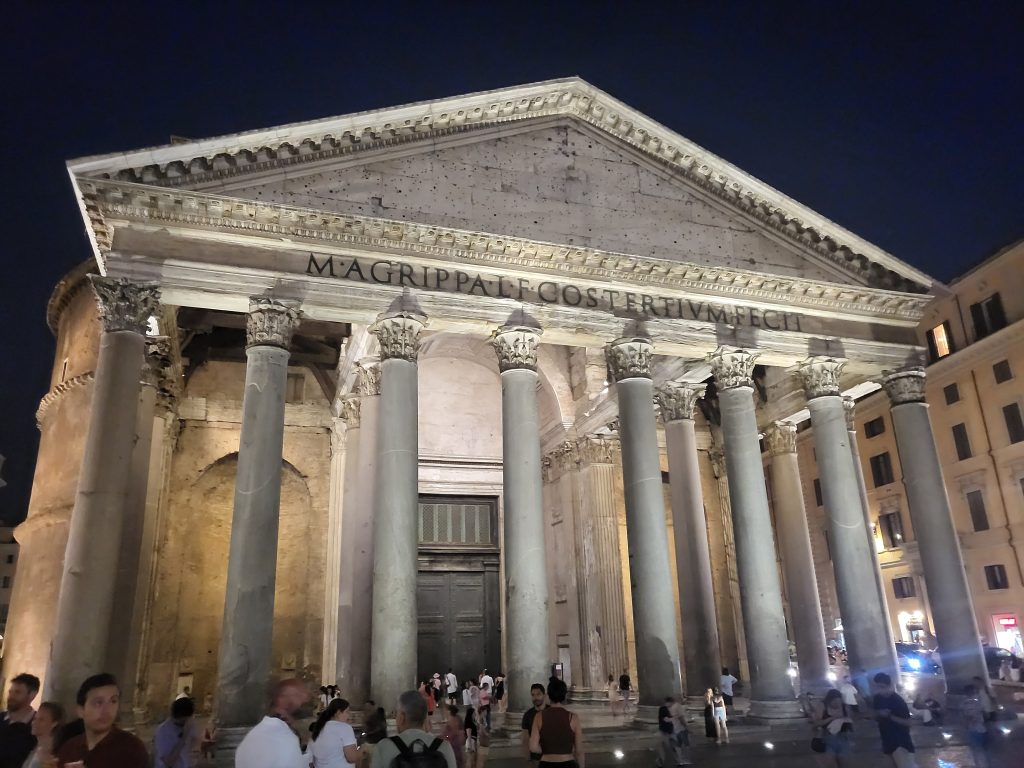
Morning: The Pantheon & Piazza Navona
Begin at the Pantheon as close to opening time as possible. Entry now requires a pre-booked ticket (€5 per adult, free on the first Sunday of each month). The Pantheon is one of the best-preserved ancient buildings in the world and is still in continuous use after nearly 2,000 years. The unreinforced concrete dome remains the largest in the world at 43.3 meters in diameter.
💡 Pro Tip: Free First Sunday
The Pantheon isn’t the only free stop on the first Sunday of every month. Italy’s Domenica al Museo program opens all of the following for free:
- Colosseum, Roman Forum & Palatine Hill (free ticket collected in person)
- Galleria Borghese (reservation still required, small €2 fee)
- Castel Sant’Angelo
- Palazzo Barberini & the Capitoline Museums
- Villa d’Este and Hadrian’s Villa in Tivoli
Three bonus free dates apply year-round too: April 25, June 2, and November 4.
The trade-off: it’s also the most crowded day of the month at every site on this list. Great for saving money, not great if you’d rather avoid the crush.
From the Pantheon, it’s a five-minute walk to Piazza Navona. Avoid the overpriced cafes on the square. It’s much more reasonable to get your espresso (that you will need by now) standing at a bar on one of the side streets and return to sit and admire Bernini’s Fountain of the Four Rivers.
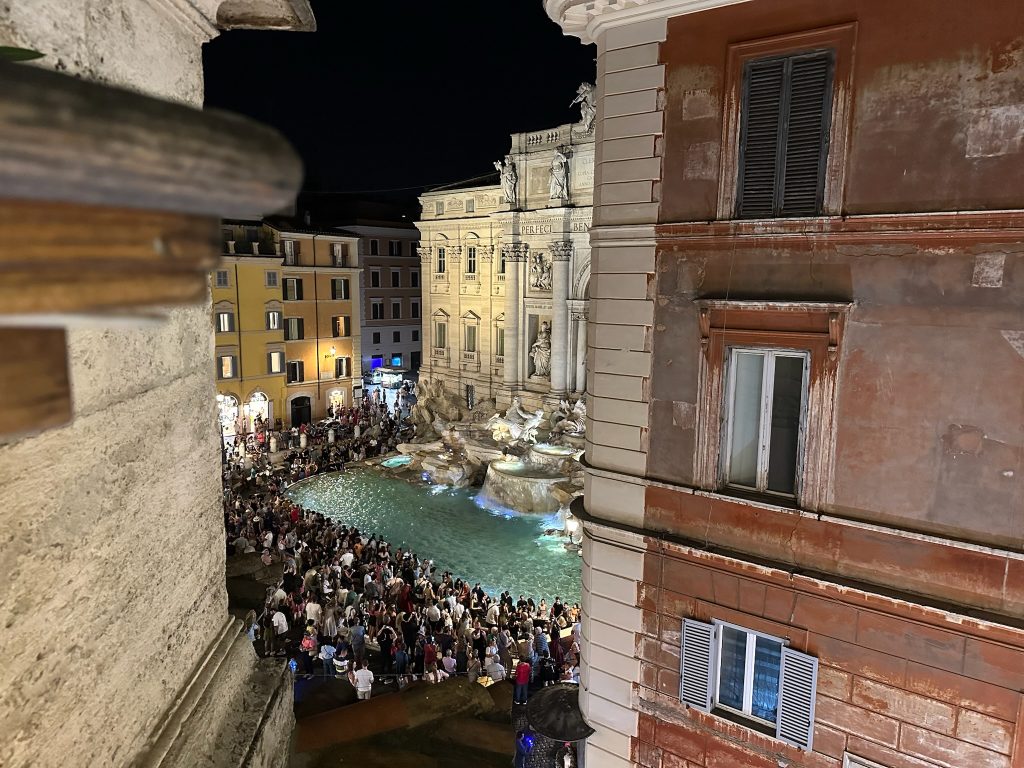
🚨Trevi Fountain update (2026):
As of February 2026, visiting the lower basin area between 9am-10PM of the Trevi Fountain costs €2 per person. It is free outside those hours and free from the piazza above at all times.
Afternoon: Trevi Fountain, Spanish Steps & Monti Shopping
Walk from Piazza Navona through the medieval streets toward the Trevi Fountain. Visit mid-afternoon for the best photos, or return in the evening when the illumination is stunning. The tradition of throwing a coin over your left shoulder with your right hand is said to ensure a return visit.
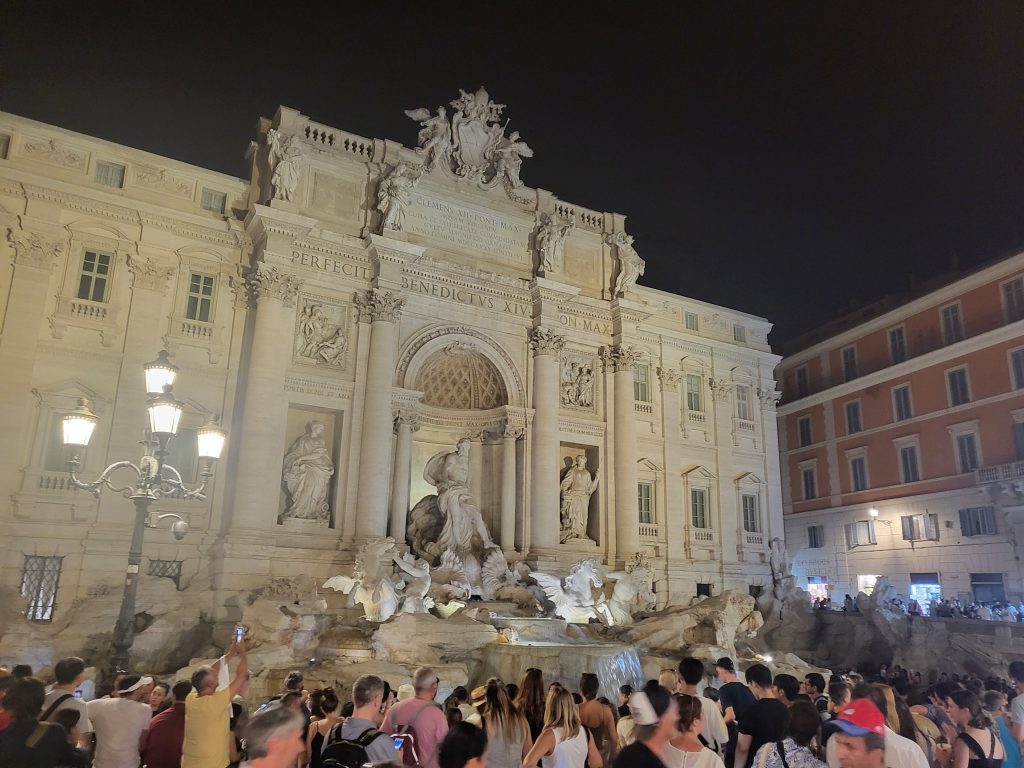
From the Trevi, it’s a pleasant 10-minute walk to the Spanish Steps (Scalinata di Trinità dei Monti). The Spanish Steps are 135 steps completed in 1725, connecting Piazza di Spagna with the Trinità dei Monti church above. The Fontana della Barcaccia at the foot was built by Pietro Bernini (father of Gian Lorenzo) in 1629. Free to visit.
Spend the remaining afternoon in Monti for browsing the independent boutiques, vintage shops, and artisan stores occupy every other doorway.
Evening: Trastevere for Dinner
End the day with dinner in Trastevere. The streets are narrow, the buildings are covered in vines and faded frescoes, and the restaurants range from very good to extraordinary. Book ahead in high season. Walk-ins usually fill up by 8:00 PM, so if you don’t have a reservation, go early.
3 Day, Per-Person Budget Breakdown
| Category | 💰 Budget | 💶 Mid-Range | 💎 Luxury |
|---|---|---|---|
| Accommodation (per night) | €70–100 | €150–250 | €300–600+ |
| Food (per day) | €30–40 | €60–80 | €120+ |
| Attractions & Tickets (3-day total) | €45–55 | €80–110 | €150+ (guided tours) |
| Transportation (per day) | €5–8 (Metro/bus) | €15–25 (mixed taxi/Metro) | €50+ (private driver) |
| Estimated Daily Total | €120–160 | €250–350 | €500–800+ |
| Estimated 3-Day Total | €360–480 | €750–1,050 | €1,500–2,400+ |
How to Spend 4 to 7 Days in Rome
If you decide you want to spend more than 3 days in Rome, just add the following to the above itinerary.
Day 4: Galleria Borghese & Villa Borghese Gardens
The Galleria Borghese is arguably Rome’s greatest single museum. It has a jaw-dropping collection of Bernini sculptures and Caravaggio paintings housed in a 17th-century villa. Entry is strictly timed and capped at 360 visitors per session, so tickets sell out weeks in advance. Book the moment you know your dates.
Pair the gallery with a long afternoon in the surrounding Villa Borghese gardens. Villa Borghese gardens is Rome’s answer to Central Park, and one of the finest places in the city to simply sit and decompress after three packed days.
On the first sunday of every month, Galleria Boghese is free to get into, but still requires the mandatory advance reservation (small €2 booking fee).
📍 Where is Borghese?
Villa Borghese sits just above the Piazza del Popolo, about a 20-minute walk from the Spanish Steps. Taxis and the Metro (Spagna, Line A) put you there in 10 minutes.
Day 5: Day Trip to Tivoli – Hadrian’s Villa & Villa d’Este
Tivoli is 30 kilometers east of Rome and about an hour by regional train from Roma Tiburtina. It contains two UNESCO World Heritage Sites worth the effort. Hadrian’s Villa (Villa Adriana) is the sprawling remains of the Roman Emperor Hadrian’s private retreat, built in the 2nd century AD. It’s larger than Pompeii and far less crowded. Villa d’Este is a 16th-century cardinal’s estate famous for its extraordinary Renaissance gardens and 500 fountains.
A full day is enough to see both if you start early. Tivoli makes for an excellent half-day itinerary by combining the two. Return to Rome in time for a late dinner.
The first Sunday of every month, Villa d’Este and Hadrian’s Villa in Tivoli are free to visit!
Days 6-7: Rome at a slower pace – Prati, Pigneto & Market Mornings
Two more days allow you to explore Rome’s Prati neighborhood. Prati neighborhood is the grid of wide, elegant streets directly behind the Vatican, full of excellent restaurants and completely devoid of tourist crowds. You can also visit Pigneto, Rome’s creative neighborhood in the east, with street art, independent cafes, and the kind of local bar scene that still costs €1.20 for an espresso.
📍 Where is Prati?
Prati is directly across the Tiber from Castel Sant’Angelo, a 10-minute walk from the Vatican, an ideal base for Vatican visitors who want to avoid the tourist strip around St. Peter’s.
Day 6 is also a great day to book a pizza making class in Rome. We really enjoyed this experience on our last trip to Rome.
Use a morning on day 6 or 7 for the Campo de’ Fiori market (weekday mornings only) or the Porta Portese flea market (Sunday mornings in Trastevere). These are the experiences that make Rome feel personal.
Is Rome Actually Worth Visiting? (An Honest Take)
Rome gets a complicated reputation among experienced travelers. It’s crowded, it’s sometimes chaotic, the tourist infrastructure can feel overwhelming, and the summer heat is genuinely brutal. So is it worth it?
Absolutely, unreservedly, and with one condition: go with the right expectations. Rome is not a city you can control or optimize. Its itineraries fall apart. Its queues are unpredictable. Its restaurants close without warning for the August holidays. What it gives you in exchange is unlike anywhere else on earth, the experience of a city that has been continuously inhabited, argued over, and built upon for nearly 3,000 years, where the past is not preserved behind glass but simply present in the street paving, the fountains, the walls of buildings that were old when Columbus was born.
For first-time visitors, Rome consistently ranks among the most memorable trips people take. Most people who go for three days wish they’d booked five. That’s probably the most honest endorsement there is.
🔒 Is Rome Safe?
Rome is a safe city for tourists by any reasonable standard. The main concerns are pickpocketing around major monuments (Colosseum, Trevi Fountain, Vatican) and on crowded Metro lines keep bags in front of you, use an inner pocket for your phone, and you’ll be fine. Scooter theft of bags is rare but exists so don’t dangle bags street side while sitting at outdoor cafes.
Where to Stay in Rome
For first-time visitors, the single best Rome travel tip for choosing accommodation is to stay within the historic center or the neighboring districts of Monti or Trastevere. Rome’s Metro Line C has been under constructiuon through/near the center of the city for years, but has been slowed by archaeological finds. A well-placed hotel saves you an hour of transit every day and when you only have 3 days in Rome, every hour counts.
Budget Option (~€70–100/night)
Budget travelers are best served by the Termini Station area, where clean and well-reviewed options are available for €70–100/night. The neighborhood has an unfair reputation although it’s not as polished as the historic center but it’s safe, practical, and well-connected.
📍 Where is Termini? Roma Termini is the city’s main transport hub, on Metro Line B (direct to the Colosseum at Colosseo station) and Metro Line A (direct to the Vatican area at Ottaviano station). Most major sights are 20–30 minutes away by Metro.
Mid-Range Option (~€150–250/night)
For the best mid-range experience, the Monti or Trastevere neighborhoods offer boutique hotels and guesthouses with a local feel that the hotel-heavy historic center can’t match.
📍 Where is Trastevere? Trastevere sits just across the Tiber from the historic center and is about a 20-minute walk from the Pantheon and Campo de’ Fiori, and a 30-minute walk from the Vatican. It has no Metro stop, but it’s well served by trams and is genuinely one of the most pleasant neighborhoods in Rome to be based in for an evening stroll.
Both neighborhoods are within easy walking distance of major sights. The Pantheon area has a handful of well-positioned mid-range properties including Albergo del Senato, directly facing the Pantheon on the Piazza della Rotonda
Luxury Option (~€300–600+/night)
Rome’s luxury hotel scene is exceptional and, compared to equivalent Paris or London properties, often better value. Entry-level luxury boutiques start around €300–400/night.
📍 Best locations for luxury stays: J.K. Place Roma sits between the Pantheon and Spanish Steps in a location that is walkable to both. Hotel de la Ville is positioned directly above the Spanish Steps with a legendary rooftop and immediate access to the shopping of Via Condotti. Hotel Palazzo Manfredi overlooks the Colosseum from the Caelian Hill, with rooms that face directly onto the arena.
All three range from €600 upward. Book well in advance for spring visits; April through June is peak season across all categories.
FAQs: How Many Days in Rome & How Long to Spend in Rome
Is 3 days too long in Rome?
Not remotely. Rome in 3 days is the recommended minimum for first-time visitors, not a generous luxury. With three days you can cover the top things to do in Rome such as the Colosseum, Vatican, and Pantheon, comfortably, explore two or three of Rome’s best neighborhoods, and still have time for the slow pleasures: long lunches, evening walks, and the piazza-sitting that gives Rome its particular quality. Most people who visit for three days wish they’d booked four.
Is 4 days in Rome too much?
Four days in Rome is not too much time.It’s actually the ideal length for a first visit if your schedule allows. The fourth day gives you time to visit the Galleria Borghese (which requires advance booking and is genuinely world-class for Bernini sculpture), explore more of Trastevere and Testaccio, and consider a day trip to Tivoli. The people who feel four days is ‘too long’ in Rome are usually the people who visit in August without air conditioning.
Is 2 nights in Rome long enough?
Two nights gives you two full days in Rome, which is tight but workable for a first visit. You can cover the Colosseum area on Day 1 and the Vatican plus the historic center on Day 2 if you start early and book tickets in advance. The downside of two days is you will feel rushed. If two nights is what you have, go because it’s still one of the great two days in travel. But if you can extend to three, do it.
Is a week in Rome too long?
A week in Rome is not too long, it’s closer to the right amount for anyone who wants to experience the city rather than tick it off your list. Seven days gives you the full 3-day itinerary above, a day at the Borghese Gallery, a day trip to Tivoli, time in the quieter neighborhoods of Prati and Pigneto, and the unhurried mornings that make Rome feel like it belongs to you rather than the other way around. The only caveat: if you’re visiting in July or August, five days tends to be the limit before the heat becomes the dominant experience.
Wrapping Things Up: How Many Days in Rome?
The answer to how long to spend in Rome is always more than you think. Rome is a city that has so much to offer with so much history. A day spent as a tourist in Rome will not pass without accidental discoveries. Three days is the point at which Rome starts to feel like a place rather than a whirlwind checklist.
Plan three days minimum. Book your Colosseum, Vatican, and Pantheon tickets before you leave home. Stay in or near the historic center for easy access to everything. Eat standing at coffee bars like a local. And throw that coin in the Trevi Fountain, because you will absolutely want to come back.
