
Split to Hvar Ferry: Everything You Need to Know
Taking the ferry from Split to Hvar is easy once you’ve done it, but a handful of details would have made our first crossing a lot less stressful. Here’s what to expect, from booking your ticket to the steep taxi ride at the other end.
Flying in first? Our guide to getting from Split Airport to Old Town covers the first leg of the trip.
⛴️ Quick Answers
- Cost: We paid €25 per person (booked about 5 weeks ahead for the first week of September)
- Crossing time: About 1 hour
- Arrive at the port: 30 to 45 minutes before departure
- Boarding starts: About 30 minutes before departure
- Tickets: Printed or on your phone, both work
- Luggage: Yes, stored in racks at the back of the boat
Wandering Everywhere contains affiliate links and is a member of Amazon Services LLC Associates Program. If you make a purchase using one of our links, we may receive compensation from the company at no additional cost to you. Read our disclaimer here.
Booking the ferry
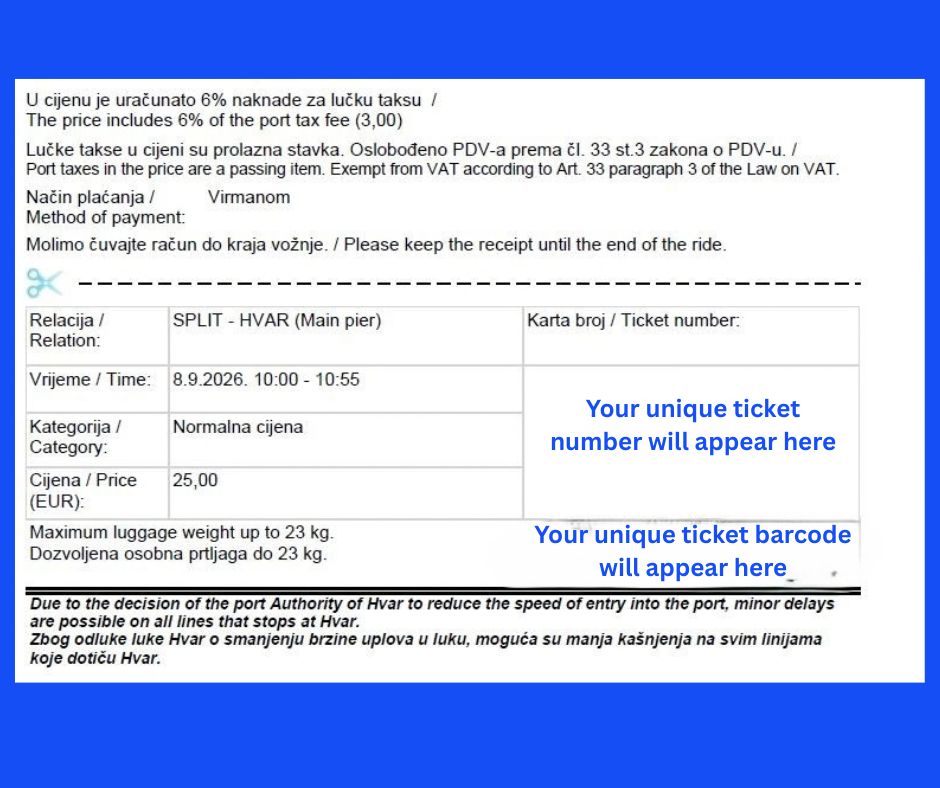
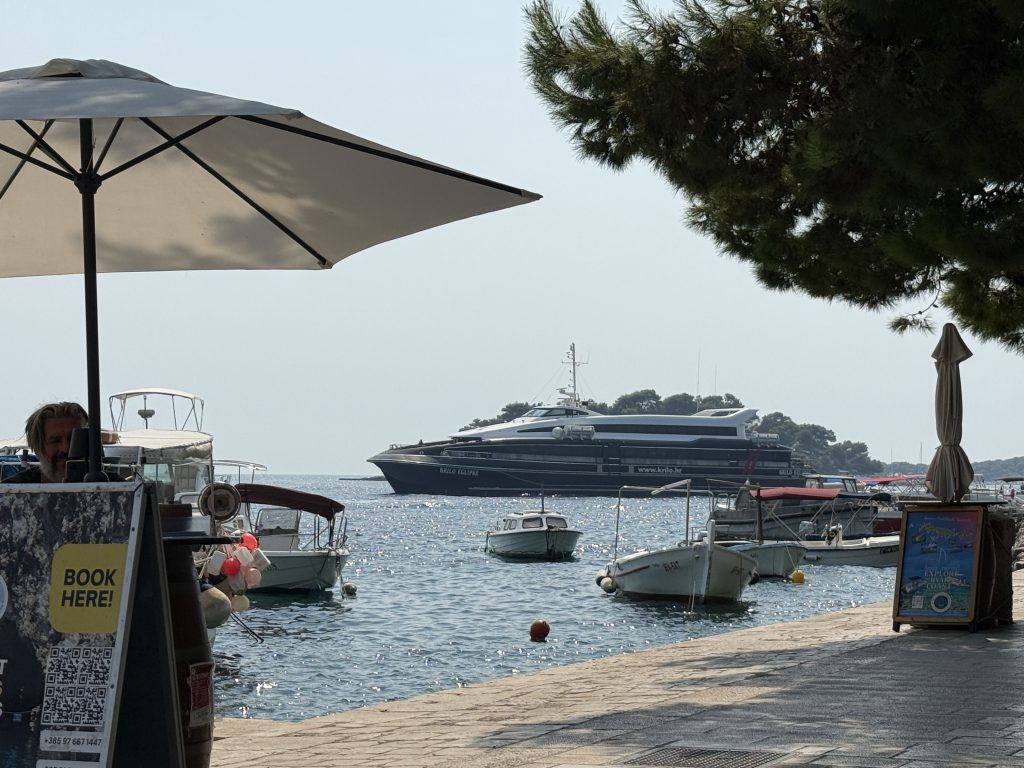
We pre-booked the Krilo catamaran (run by Kapetan Luka) for €25 each, from the Port of Split directly into Hvar Town. Krilo is one of a few companies on this route, along with TP Line and Jadrolinija, and prices vary by operator, season, and how far ahead you book, so compare before you commit.
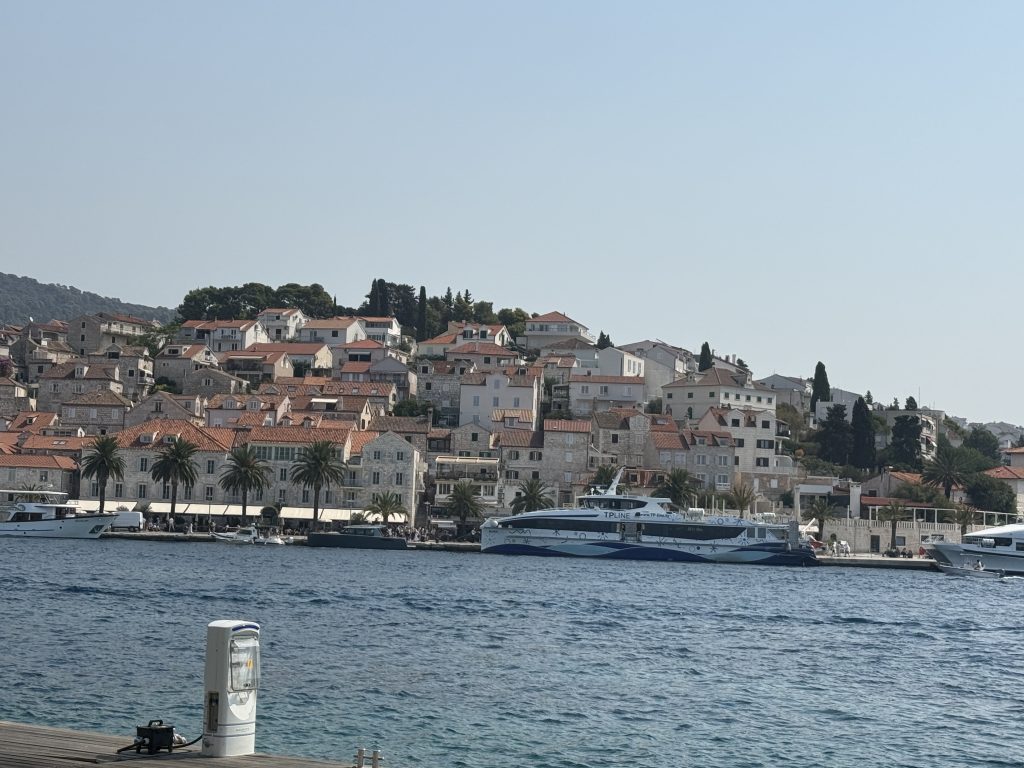
One thing that can confuse tourists is that there are multiple ports in Hvar. If you are going to Hvar for the day, most people go to Hvar Town, not Stari Grad. The big car ferries from Split dock at Stari Grad, on the other side of the island, about a 20-minute drive from Hvar Town. If you’re not bringing a car, the passenger catamaran into Hvar Town is almost always the better choice.
We chose our departure based on timing, not price or company. With only two days on the island, we wanted to arrive early enough to enjoy most of the day, but we were on vacation and had no interest in setting an early alarm. The 10:00 AM departure hit that balance perfectly.
We also looked at booking through Omio, which we’ve used across many other countries and found easy and reliable. It works well here too, just expect to pay a couple of euros more per ticket than booking directly on Krilo’s site. If you value a familiar booking app over saving a few euros, it’s a perfectly good option.
Do you need to book ahead? Not always. While we waited in line, we met several people who had bought tickets that same day with no trouble. We traveled the first week of September, just after peak season, which likely helped with both price and availability. In July and August, ferries can sell out and fares run higher, so booking ahead is the safer move. From late September through winter, crossings become less frequent, so check the schedule before you go rather than assuming a boat will be waiting.
Getting to the port
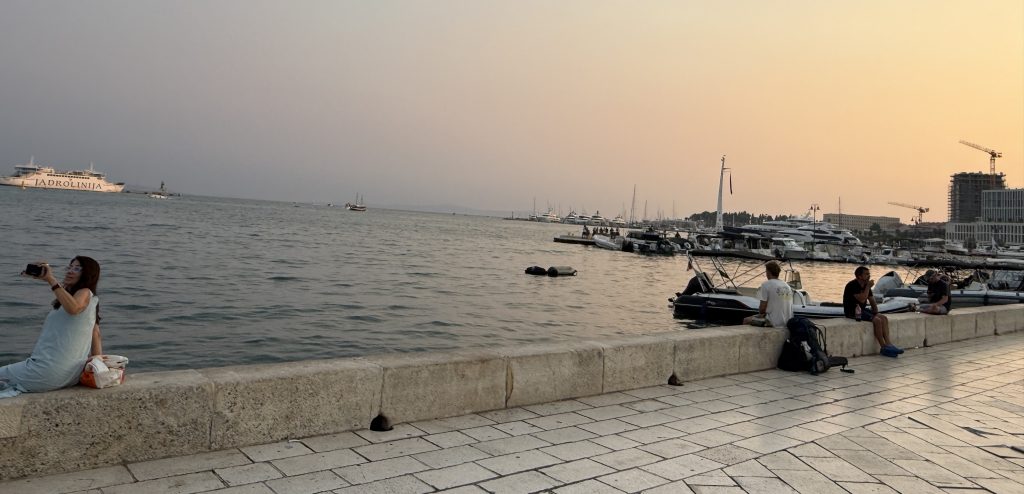
We stayed right inside Diocletian’s Palace at Hotel Kastel 1700, during our 2 days in Split. The walk to the port took less than 10 minutesand was closer than we expected. Since we didn’t know that ahead of time, we left plenty of extra time anyway.
On the way, we grabbed a pastry and coffee at one of the few spots along our route. It was the worst pastry of our entire trip since it was both stale and overpriced. If you’re walking from the Old Town, pick a bakery ahead of time instead of settling for whatever’s closest to the pier.
Finding your ferry at the port
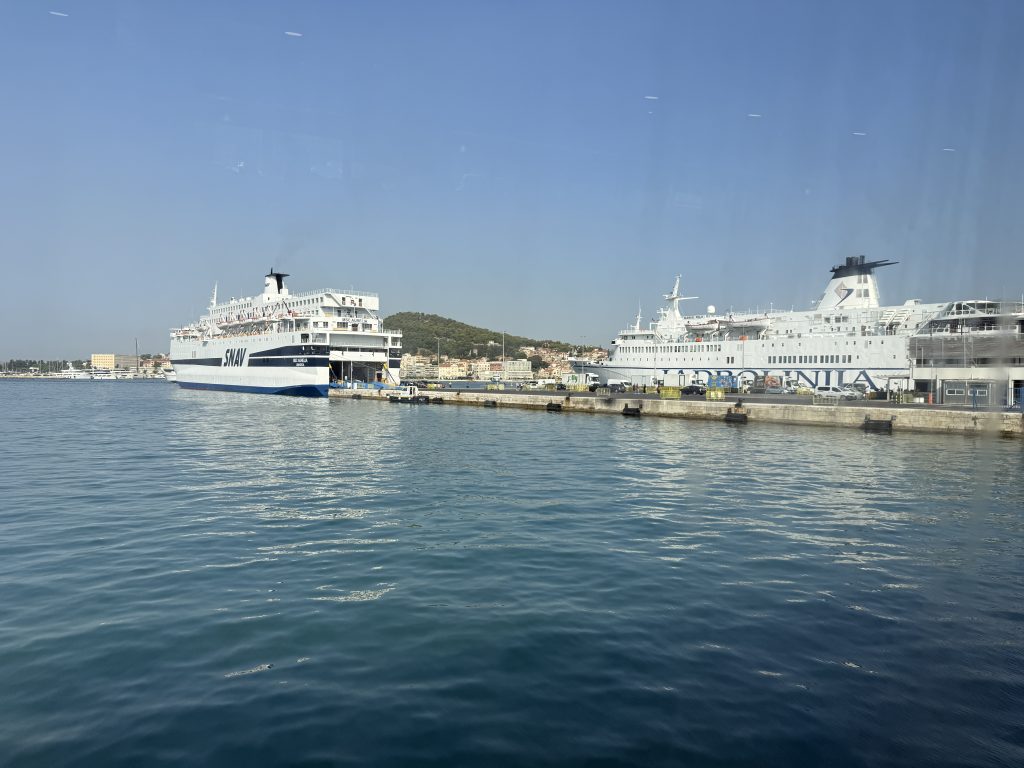
This was the part we were most unsure about, and for good reason. Split’s port is big, with multiple piers handling local catamarans, international ferries, and cruise ships all at once. It’s not obvious where your boat leaves from.
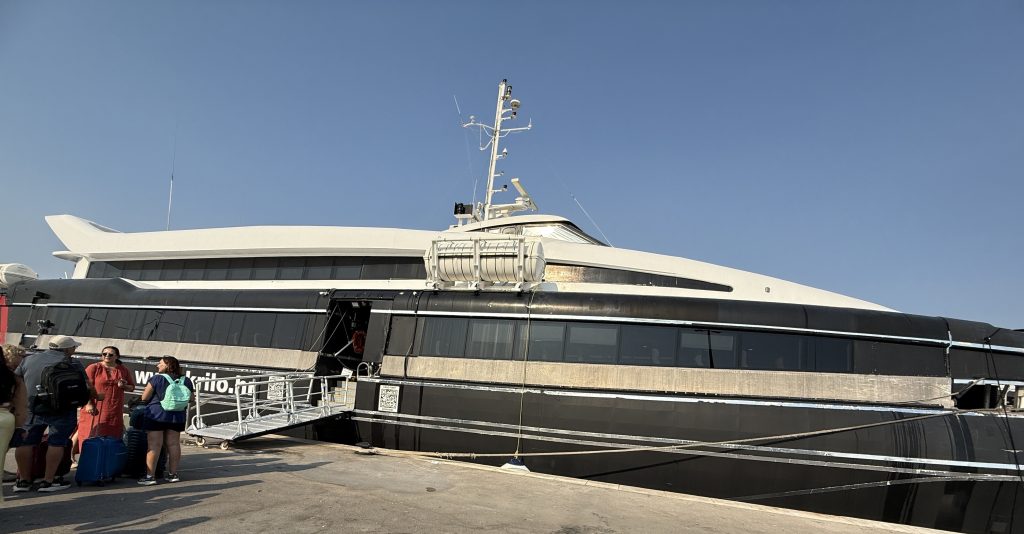
We found a small ticket booth and asked. They pointed us to the left, toward marker 23, where we spotted our ferry and a short line already forming. (Pier assignments can change, so check your ticket and ask if you’re unsure.)
We arrived about 45 minutes early, which was plenty. Boarding started around 30 minutes before departure. Getting there early also meant space in the luggage racks and our pick of seats. That didn’t matter much on this crossing since the boat never completely filled, but on other Croatian ferries we took, latecomers ended up with no seats, split-up groups, and luggage piled wherever it would fit.
One heads-up: there’s no shade in the boarding line. In warmer months, bring a hat or put on sunscreen before you queue.
Boarding
At the front of the line, a deckhand scans your ticket, either printed or as a barcode on your phone. Have it pulled up before you reach him since fumbling for it with a line behind you is no fun.
You’ll board across a portable metal ramp that bridges the gap between the dock and the boat. It’s grated, slopes uphill, and is awkward underfoot. We watched several people struggle to roll their suitcases across it. If you can lift your bag instead of rolling it, boarding (and getting off) is much smoother.
What to expect on board
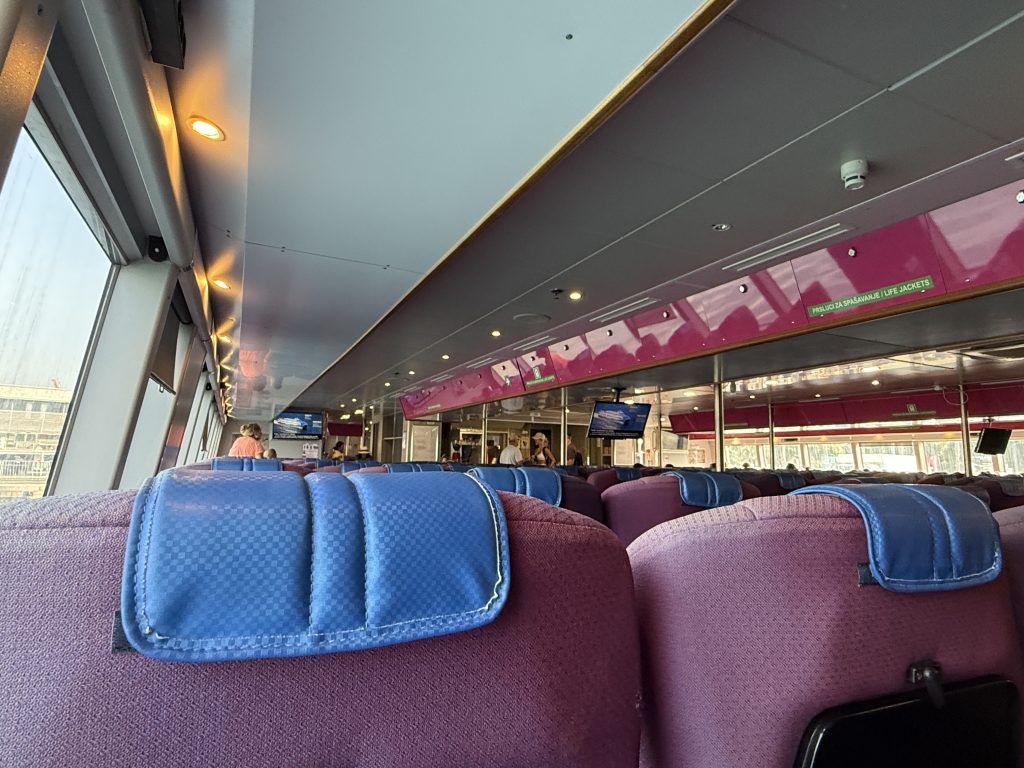
Crew directed us to store our luggage at the back of the boat, in two designated areas on the left and right sides. We grabbed seats nearby so we could keep an eye on our bags.
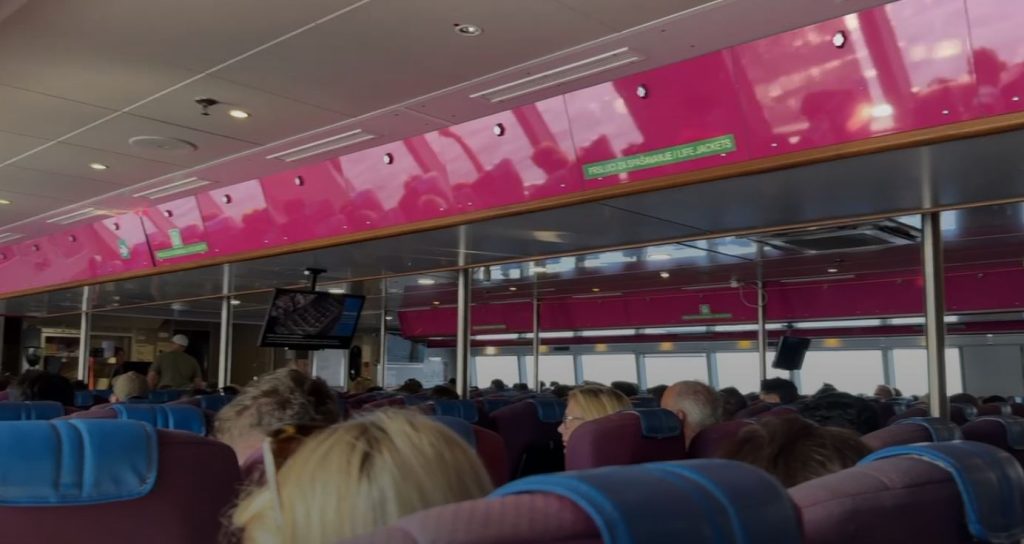
The cabin is fully enclosed, with rows of three seats along each side and another section down the middle. There’s a small snack counter near the front. Our boat had an upper level, but it was closed, and there was no outdoor deck.
By departure, the ferry had filled up quite a bit, though a few seats were still empty. Plenty of passengers were clearly day-trippers with no luggage, just a small daypack, and some already in swimsuits and cover-ups on.
We left right on time, and the ride was smooth. We sat on the left side by a window, and as soon as we departed, the morning sun came pouring through the glass. We ended up pulling the shade down, which blocked most of the view, but the alternative was sitting in uncomfortable direct heat. The air conditioning was fairly weak, so the cabin stayed warm.
Our Split to Hvar crossing ran right on schedule, and in our experience that’s typical, as long as the weather cooperates, Croatian ferries are generally very punctual. Rough seas are a different story. On our trip from Korčula to Dubrovnik, choppy water left our ferry 45 minutes late picking us up and 1 hour and 25 minutes late dropping us off. If the forecast calls for wind or rough seas, build extra time into your plans. Avoid booking a tight connection, like a flight or a second ferry, on the same day.
Tip: On a morning departure, sit on the right side of the boat. You’ll be heading south, so the left side takes the brunt of the morning sun, and on the right you can keep your shade up and enjoy the view.
Arriving in Hvar
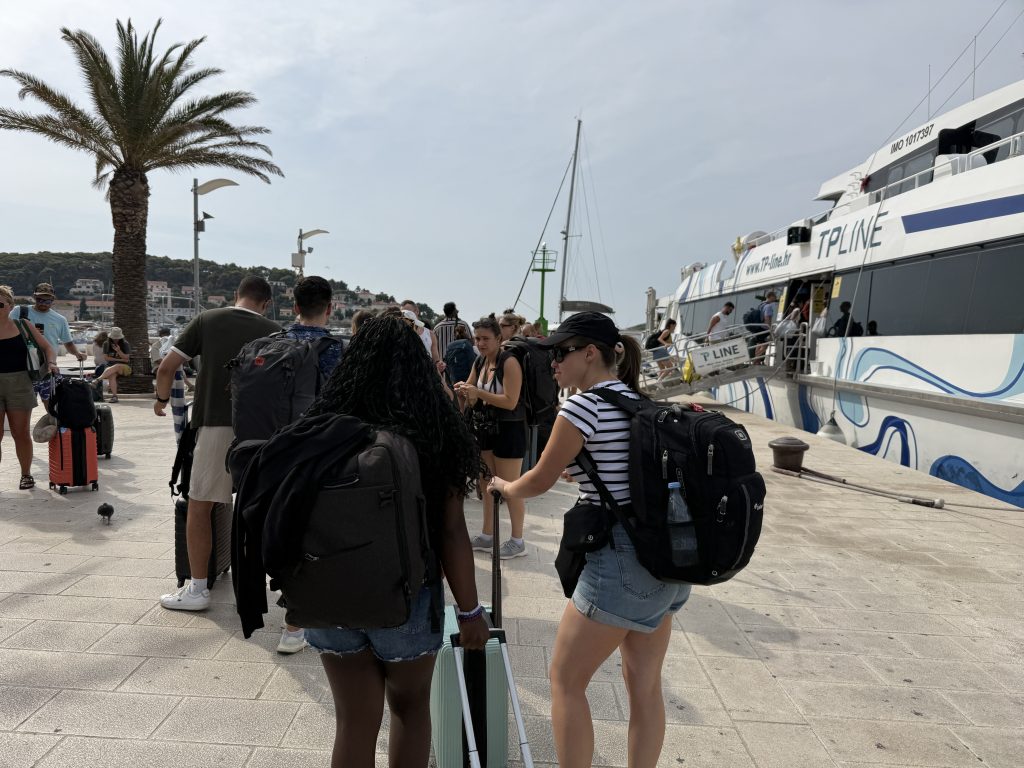
As we pulled into Hvar, we could already see a line of people on the dock, many with suitcases, waiting for the return trip. We arrived right on schedule, collected our luggage, and crossed the same style of metal ramp to get off.
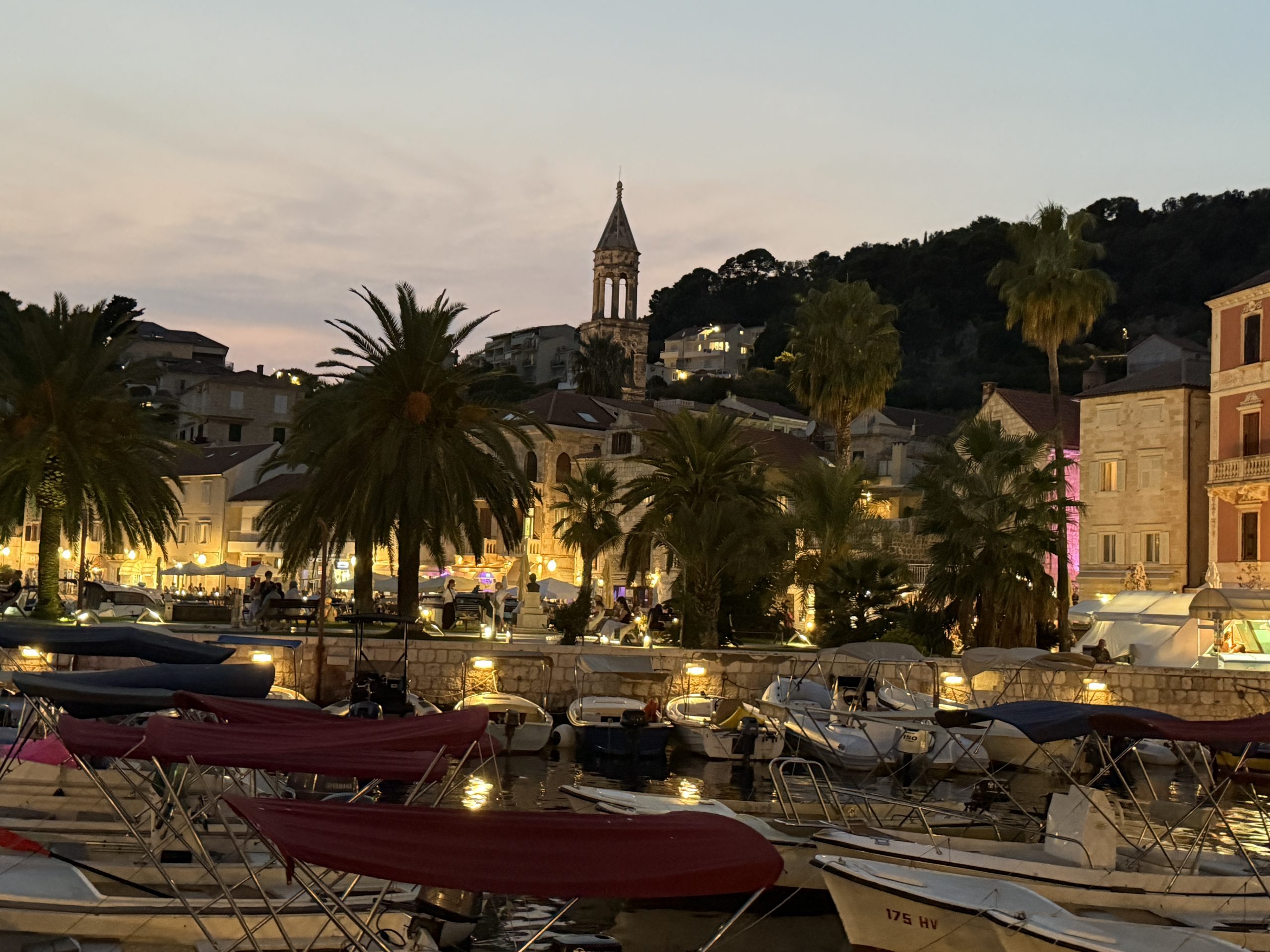
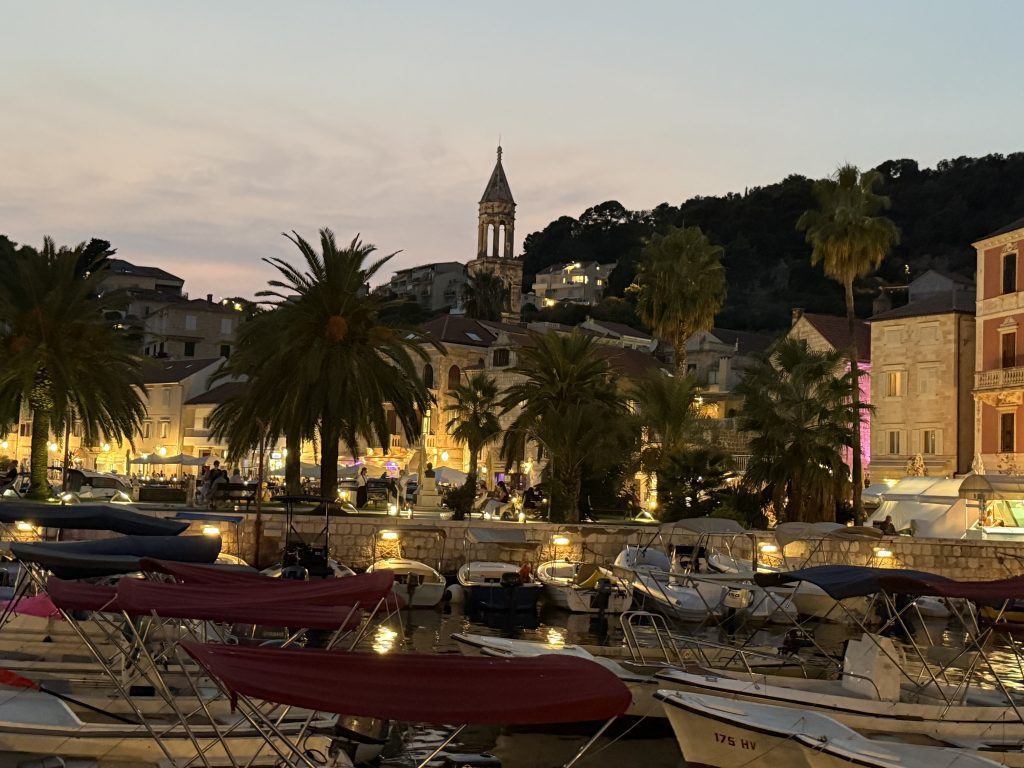
Cars aren’t allowed near the port, since it borders Hvar’s Old Town, and the streets are worn stone blocks. We followed the waterfront to the left, past restaurants and a few shops, until we reached a church and a small square. From there, we walked away from the water to a parking lot where taxis were lined up.
Getting from the port to your hotel
We hadn’t pre-booked a taxi and didn’t need to. The flat rate was €20 for what turned out to be a very short but steep uphill drive to our hotel, the Podstine. Walking it with luggage would not have been realistic. If your hotel is outside the flat area near the port, check the route before you arrive and budget for a taxi.
Practical tips for the Split to Hvar ferry
- Book to Hvar Town, not Stari Grad, unless you’re bringing a car.
- Arrive 30 to 45 minutes early. Boarding started about 30 minutes before departure, and arriving early means luggage space and your choice of seats.
- Compare Krilo’s site against Omio. Booking directly is a few euros cheaper; Omio is a convenient alternative.
- Book ahead in July and August. Shoulder season was easier and cheaper for us.
- Leave a buffer if the seas look rough. Ferries are usually right on time, but bad weather can cause long delays. Ours from Korčula to Dubrovnik ran almost an hour and a half late.
- Ask at a ticket booth if you can’t find your pier. Split’s port is busy, and it’s hard to tell which boat is yours just by looking.
- Bring sun protection for the boarding line. There’s no shade.
- Have your ticket ready, printed or on your phone, before you reach the front.
- Pack a bag you can lift. The boarding ramp is metal, grated, and uphill.
- Sit on the right side on morning departures to avoid the sun.
- Plan for a taxi in Hvar if your hotel is up the hill. Ours was a €20 flat rate. Some of the taxi’s took cash or cards, some said cash only. When we were running low on cash, we asked them beforehand.
FAQ: Split to Hvar ferry
How much does the ferry from Split to Hvar cost?
We paid €25 per person with Krilo, traveling the first week of September. Booking through Omio cost a couple of euros more. Prices vary by operator, season, and how far ahead you book, and summer fares run higher.
How long is the ferry ride from Split to Hvar?
About an hour. Our Krilo catamaran took right around 60 minutes, and most catamarans on this route take between 50 minutes and just over an hour. The slower car ferries to Stari Grad take longer, so check which one you’re booking. Rough seas can also add time, so leave a buffer if the forecast looks windy.
Does the ferry go to Hvar Town or Stari Grad?
Both, depending on the boat. Passenger catamarans like Krilo go directly to Hvar Town. The larger car ferries go to Stari Grad, about a 20-minute drive from Hvar Town.
How early should I arrive for the Split to Hvar ferry?
Aim for 30 minutes before departure. We arrived 45 minutes early and had time to spare, and boarding began about 30 minutes before we left. Arriving early also gets you space in the luggage racks and your pick of seats, which matters more on busy summer crossings. If you have to wait on the boat to arrive (like when we departed Hvar on our way to Dubrovnik), the ferry came only a few minutes before departure time, so we boarded quickly right at departure time.
Is it hard to find the right ferry at Split’s port?
It can be. The port handles multiple companies and boat types at once. If you’re unsure, ask at one of the small ticket booths near the piers.
Can you bring luggage on the Split to Hvar ferry?
Yes. Our ferry had luggage storage at the back of the boat, and crew showed passengers where to put their bags. Since you board over a metal ramp, a bag you can lift is easier than one you have to roll.
Do I need a printed ticket?
No. At the front of the boarding line, a deckhand scans either a printed ticket or the barcode on your phone. If you go digital, pull it up before you reach the front, and consider taking a screenshot in case your signal is spotty at the port. Most people in line were showing digital tickets.
How do you get from Hvar’s port to your hotel?
Taxis wait in a parking lot a short walk from the port, past the main square. We paid a €20 flat rate for a short but steep uphill ride. You can also use Hvar’s ride app, Pickapp. They can also pick you up close to the parking lot near the main square (since they can not drive beyond that).
Are Croatian ferries on time?
Generally, yes. Our Split to Hvar ferry left and arrived right on schedule. Weather is the big exception: rough seas delayed our Korčula to Dubrovnik ferry by 45 minutes at pickup and nearly an hour and a half at arrival. If the forecast looks windy, avoid tight same-day connections.
Wrapping Things up: Split to Hvar on a Passenger Ferry
For us, the crossing itself is the easy part. It was smooth, on time, relativley short and air-conditioned (if a little warm). What takes some figuring out is everything around it, from finding the right pier to getting your luggage over the ramp to knowing how far uphill your hotel is. Give yourself a little extra time on both ends, and the Split to Hvar ferry becomes one of the easiest legs of your Croatia trip.
