
23 Free (and Free-ish) Things to Do in Charleston, SC
Wandering Everywhere contains affiliate links and is a member of Amazon Services LLC Associates Program. If you make a purchase using one of our links, we may receive compensation from the company at no additional cost to you. Read our disclaimer here.
The best free things to do in Charleston, South Carolina include strolling Waterfront Park and the Pineapple Fountain, photographing Rainbow Row, walking the Battery and White Point Garden, browsing the historic City Market, touring the city’s churches, and walking or biking the Ravenel Bridge. Many of Charleston’s popular sights are free to see, but keep in mind you may still may need to pay for parking or food.
Charleston has a reputation for being pricey, but some of its best experiences cost nothing. From the harbor to the historic district, these are the best free things to see in Charleston SC without spending a dime. As a longtime Charleston local, I’ve pulled together this guide to the best free (and a few “free-ish”) things to do in the city, all from firsthand experience. It’s updated regularly and organized by downtown, the areas near Charleston, and North Charleston, with money-saving tips and FAQs to help you plan.
Whether you’re after free attractions in Charleston SC for adults or an easy family day out, you’ll find plenty of options below. If you’re just starting to map out your trip, my complete Charleston travel guide and roundup of things to do in Charleston are good companions to this list.
Free Things to Do in Charleston at a Glance
| Attraction | Area | Hours | Cost |
|---|---|---|---|
| Waterfront Park & Pineapple Fountain | Downtown | Daily, dawn to dusk | Free |
| Rainbow Row | Downtown | Anytime (exterior) | Free |
| The Battery | Downtown | Anytime | Free |
| White Point Garden | Downtown | Anytime | Free |
| Charleston City Market | Downtown | Daily, ~9:30 a.m.–5:30 p.m. | Free to enter |
| Historic churches | Downtown | Mon–Thu, varies | Free (Huguenot: small donation) |
| Ravenel Bridge walk/bike | Downtown to Mt. Pleasant | Anytime | Free |
| Hampton Park | Downtown peninsula | Daily | Free |
| American Gardens | Downtown (King St) | Daily | Free |
| Self-guided history tour | Downtown | Anytime | Free (apps free–low cost) |
| Old streets & alleyways | Downtown | Anytime | Free |
| Charleston Farmers Market | Downtown (Marion Sq) | Sat 8 a.m.–2 p.m., Apr–Dec | Free to enter |
| Avery Research Center | Downtown (CofC) | Set times | Free |
| Mace Brown Museum of Natural History | Downtown (CofC) | Check site | Free |
| Best Friend Train Museum | Downtown | Daily, 9 a.m.–5 p.m. | Free |
| Halsey Institute of Contemporary Art | Downtown (CofC) | Tue-Sat, varies (closed between shows) | Free |
| Beaches (Folly, Sullivan’s, IOP) | Near Charleston | Daily | Free (paid parking) |
| Morris Island Lighthouse view | Folly Beach | Daily (low tide best) | $1/person |
| Pitt Street Bridge | Mt. Pleasant | Anytime | Free |
| Old Village | Mt. Pleasant | Anytime | Free |
| Shem Creek Park | Mt. Pleasant | 5 a.m.-midnight | Free |
| Riverfront Park | North Charleston | Daily | Free |
| Park Circle | North Charleston | Daily; market Thu in season | Free |
Free Things to Do in Downtown Charleston
1. Waterfront Park & the Pineapple Fountain
Where: End of Vendue Range and Concord Streets, downtown · Hours: Daily, dawn to dusk · Cost: Free
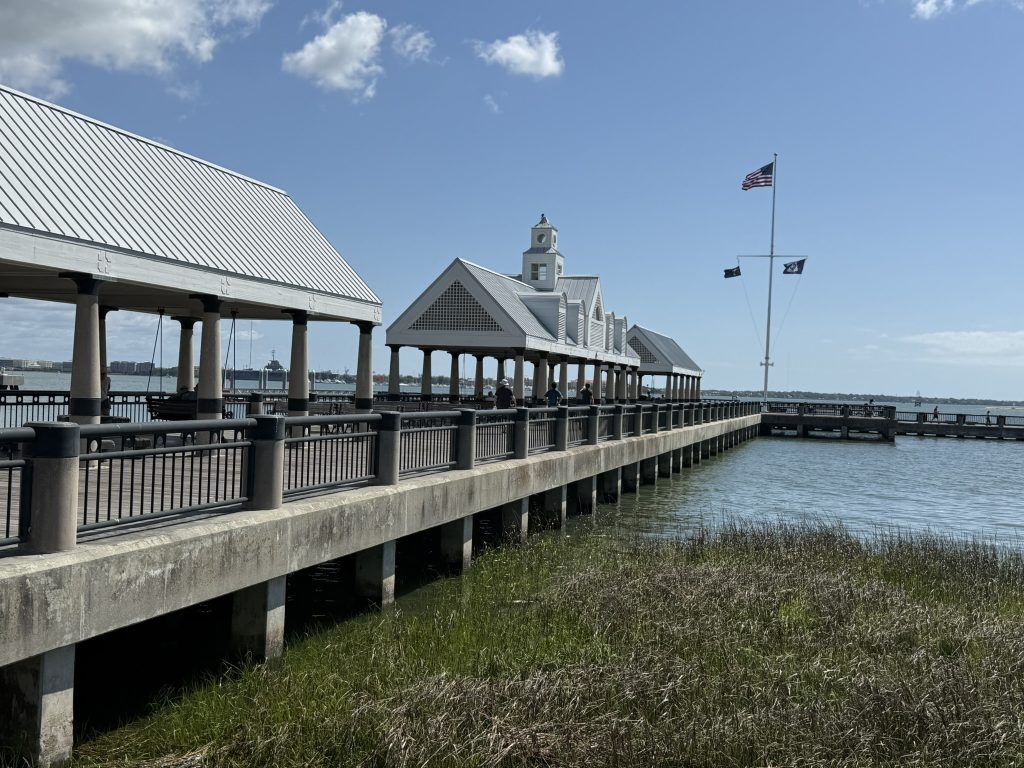
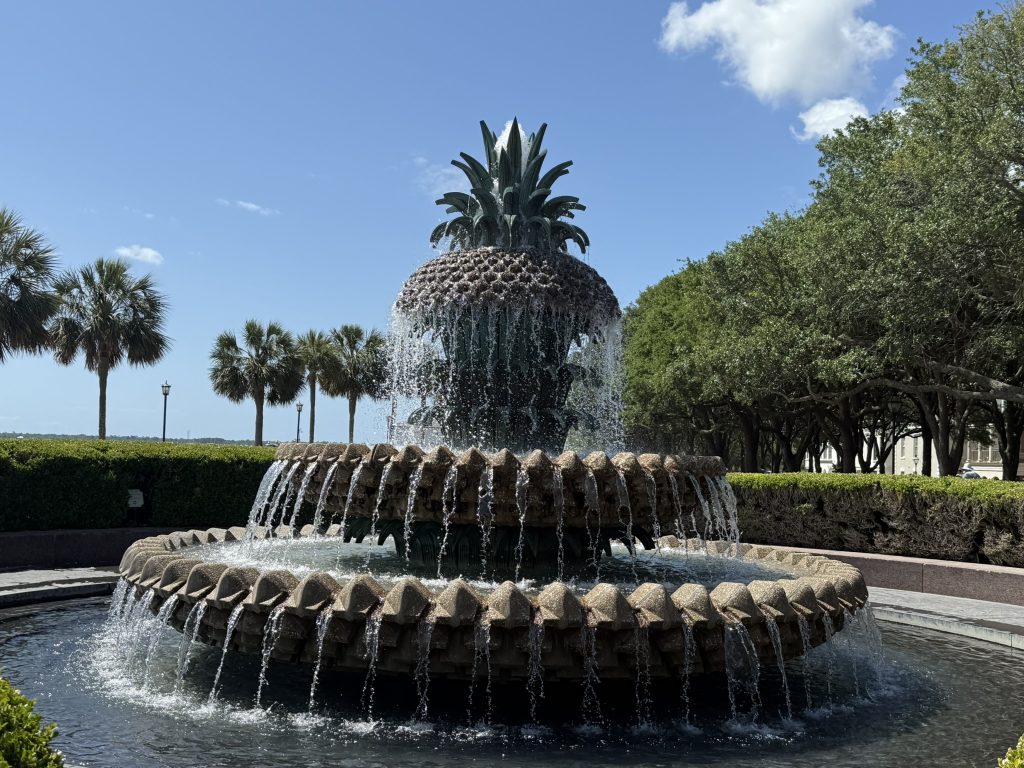
Waterfront Park sits at the end of Vendue Range and Concord Streets. Walk out on the pier for harbor views, relax on the porch swings (a famously romantic perch that earns a spot in my Charleston itinerary for couples), or dip your feet in the fountain. From there, follow the waterside path, or the shadier tree-lined route on the other side of the lawn (both have plenty of benches for a rest), until you reach the Pineapple Fountain, the photo op that’s become synonymous with Charleston. Keep going to the end of the park, then take a right onto Boyce’s Wharf and walk to East Bay Street, which drops you right at the center of Rainbow Row (#2). Bring a packable picnic blanket and travel lawn games and you can easily linger here for hours.
2. Rainbow Row
Where: 79–107 East Bay Street, downtown · Hours: View anytime (private homes) · Cost: Free
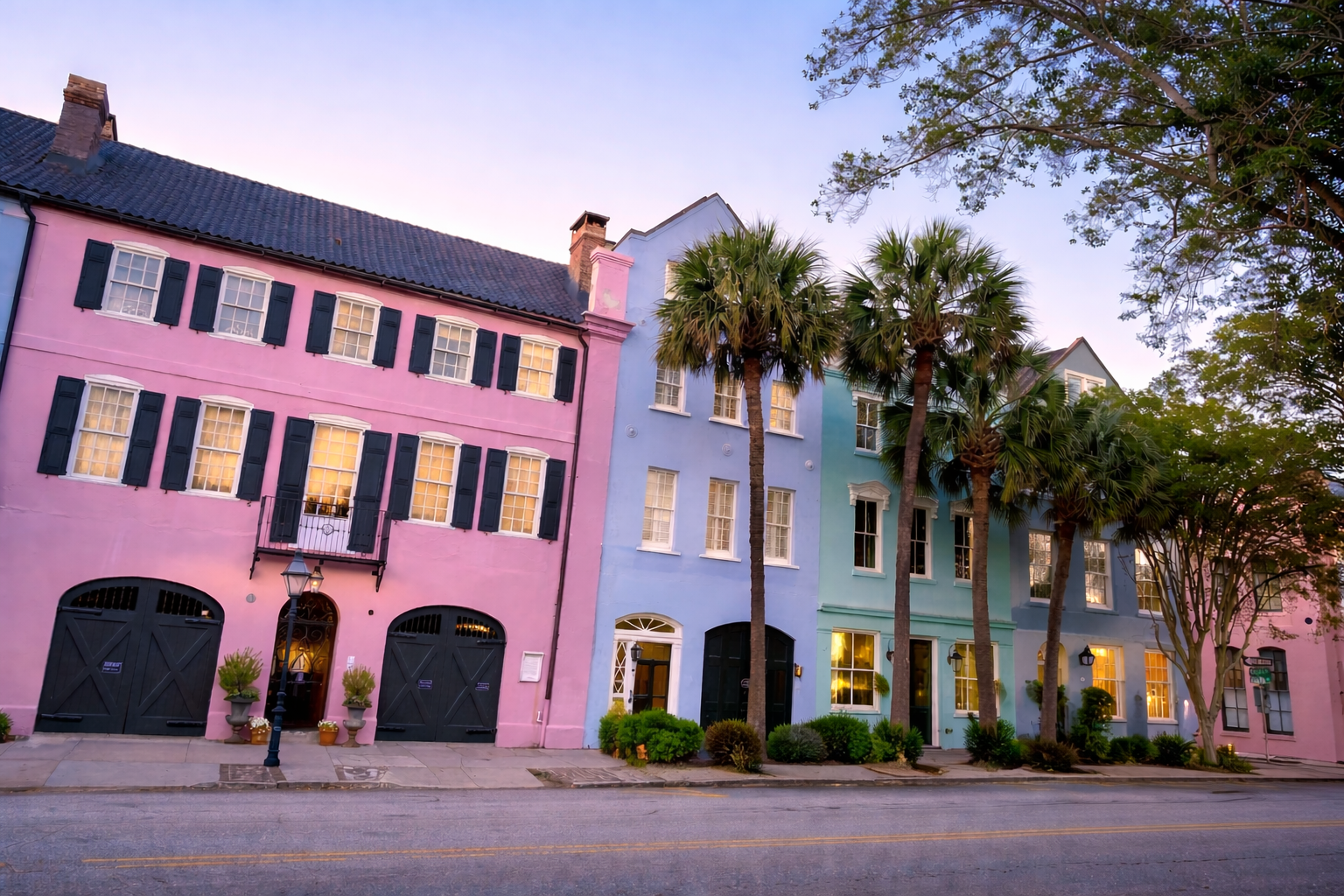
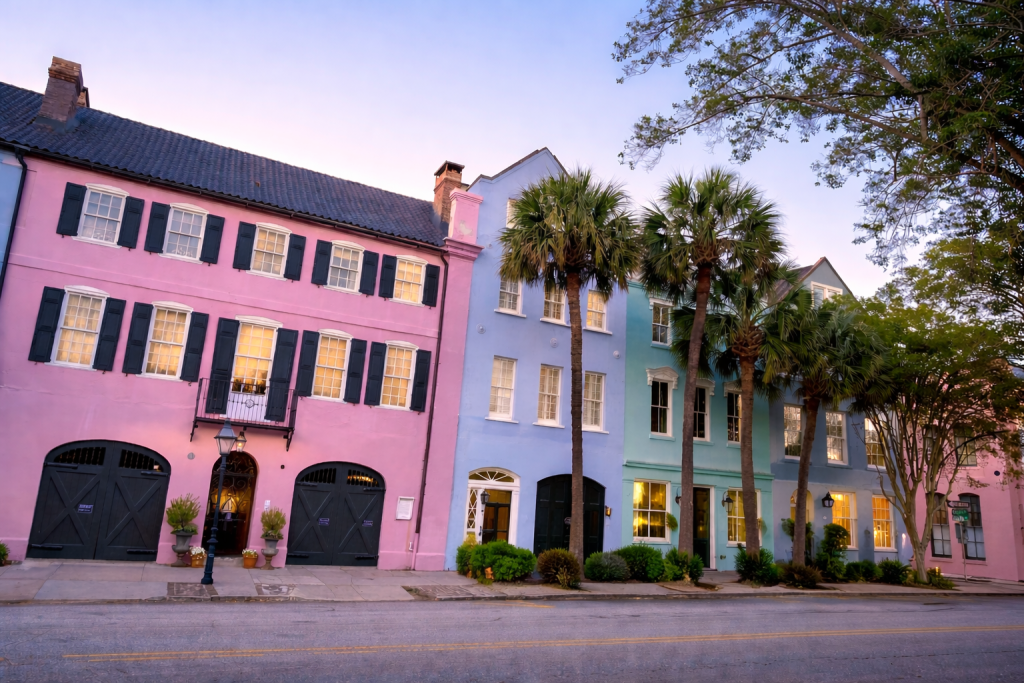
Rainbow Row is a stretch of 13 colorful, much-photographed historic homes running from 79–107 East Bay Street. You can view them from either side of the street (the houses sit on the side away from the water). Facing away from the water, head left, and in a few blocks you’ll reach the Battery (#3).
3. The Battery
Where: East Battery Street, downtown · Hours: Open anytime · Cost: Free
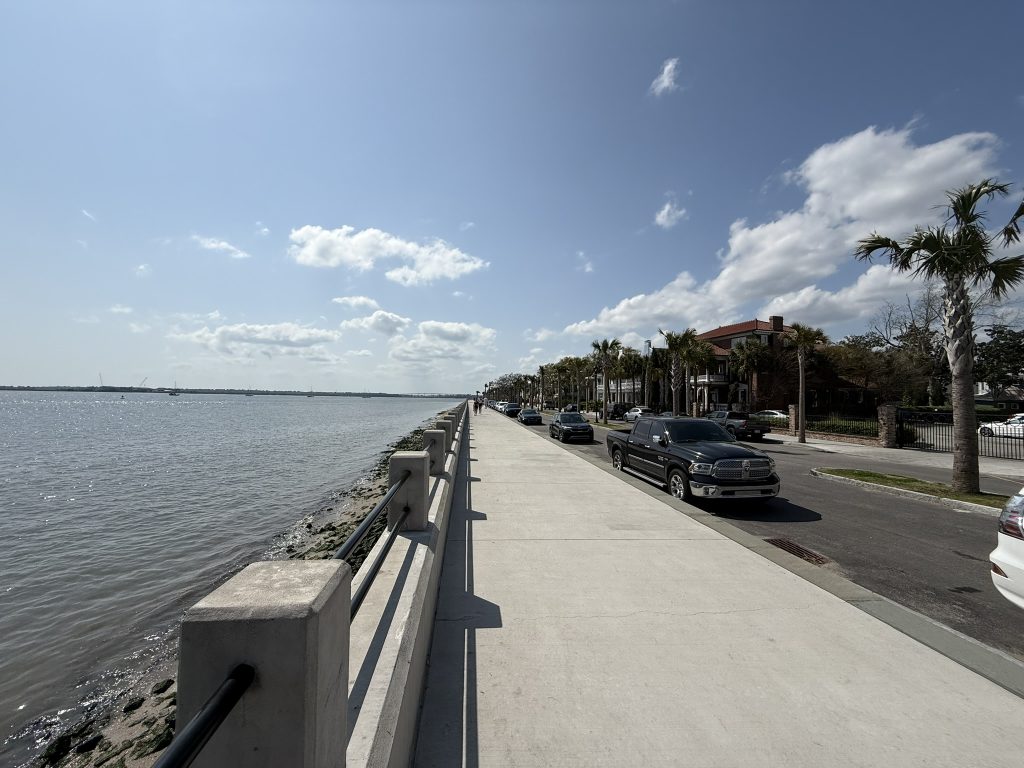
At the Battery you’ll meet the water and a promenade running along the harbor side of the street. Past Water Street, East Bay seamlessly becomes East Battery, which is where you want to stroll. Watch for boats and dolphins in the harbor, and look out into the bay for Fort Sumter, where the first shots of the Civil War were fired. You can see it for free from here, or book a ferry tour out to the fort if you want to walk its grounds. Heads up: there’s little shade and no restrooms or restaurants in n this area, so plan ahead (a sun hat and refillable water bottle help). Where the Battery bends, you’ll spot White Point Garden (#4) across the street.
4. White Point Garden
Where: Southern tip of the peninsula, downtown · Hours: Open anytime · Cost: Free
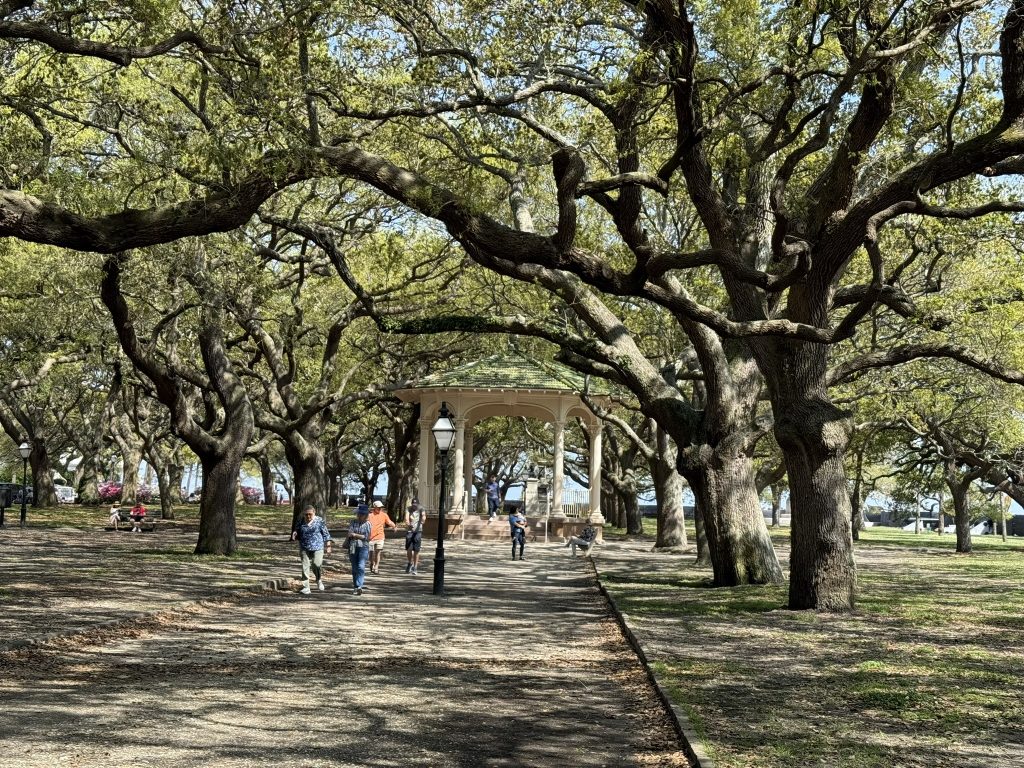
White Point Garden is a shaded public park and green space at the southern tip of the peninsula, with benches, great views of Charleston Harbor, and frequent glimpses of Fort Sumter. You’ll also find several military relics once used to defend the city.
5. Charleston City Market
Where: Market Street between East Bay and Meeting, downtown · Hours: Daily, about 9:30 a.m. to 5:30 p.m. · Cost: Free to enter
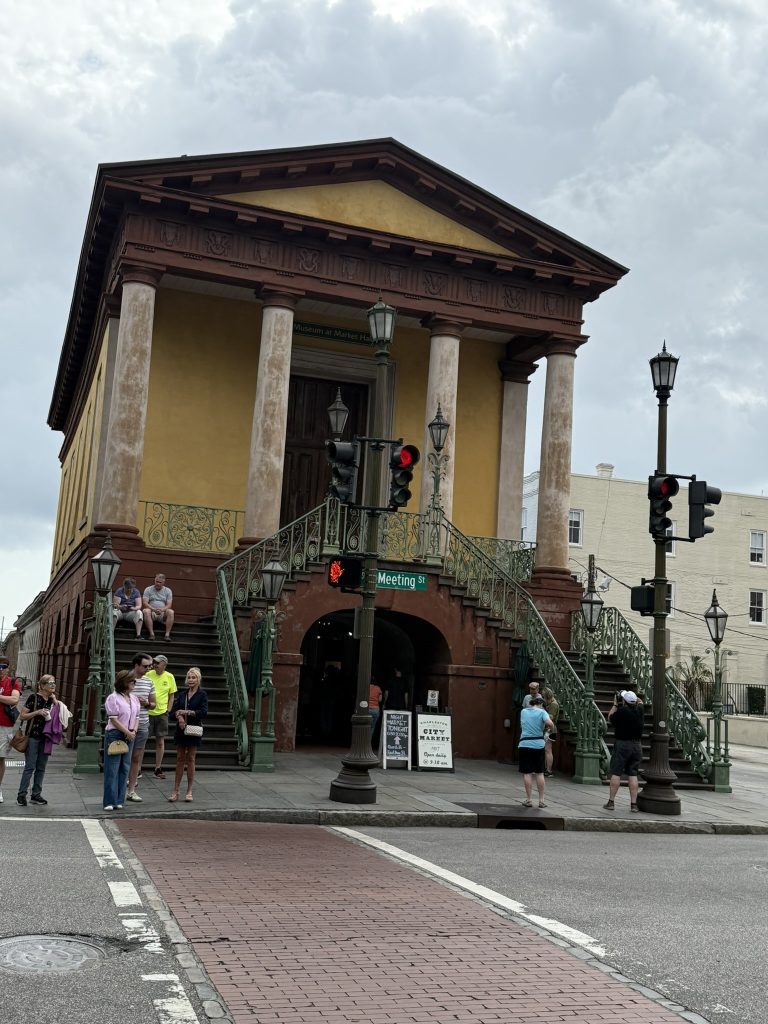
On Market Street between East Bay and Meeting, the Charleston City Market is free to enter and wander, with local artisans selling crafts, goods, and souvenirs. The market dates to the 1790s and has been rebuilt several times after fires, earthquakes, tornadoes, and hurricanes. There are free restrooms inside, and Market Hall (the Meeting Street end) is air-conditioned, a welcome break on a hot day.
6. Tour Charleston’s Historic Churches
Where: Downtown (St. Michael’s, St. Philip’s, French Huguenot) · Hours: Generally Mon–Thu, varies by church · Cost: Free (French Huguenot asks a small donation)
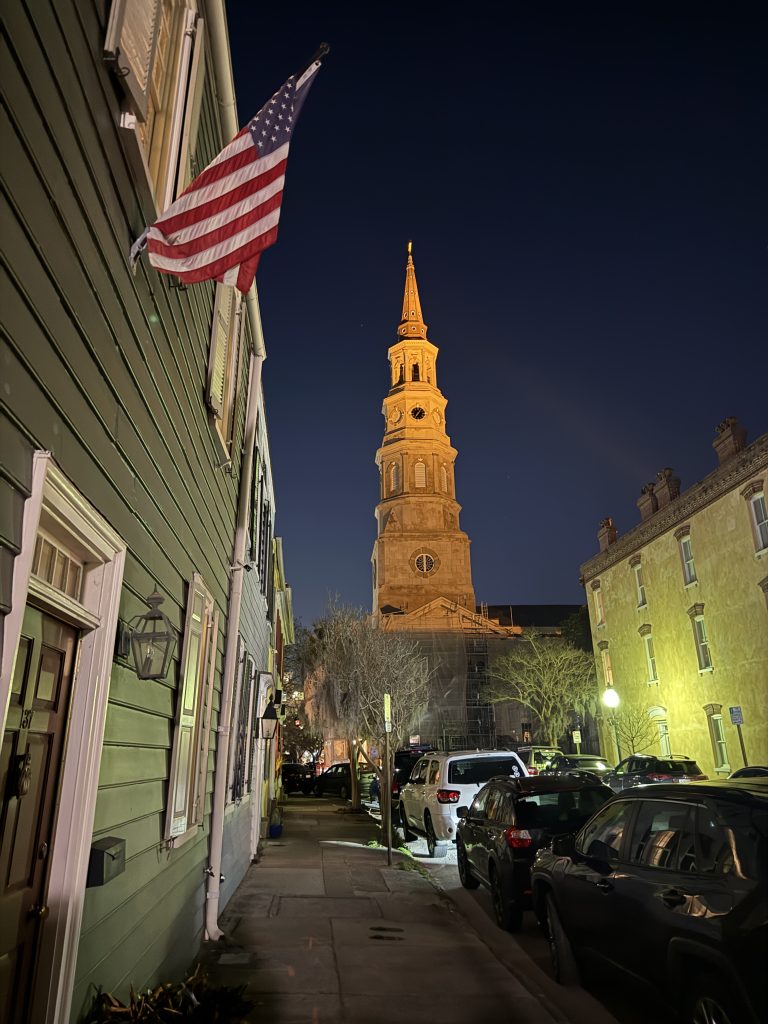
Charleston is called the Holy City for its long history of religious tolerance and its skyline of steeples. I was once told on a history tour that it has more churches per square foot than any other U.S. city. Here are few of the most-visited churches:
- St. Philip’s: Normally free to visit, with no admission charge and volunteer docents on hand for self-guided visitors. Per the church’s site, usual hours are Monday–Thursday 10 a.m.–4 p.m. and Friday 10 a.m.–1 p.m., though these can shift with volunteer scheduling, special events, maintenance, or funerals. The graveyard and cemetery across Church Street are also free during office hours and Sunday worship.
- St. Michael’s: Free to tour and currently open to visitors, which makes it a reliable pick. There’s no admission charge, and self-guided tours come with a booklet of historical facts on the folding screen in the entryway. The church and churchyard are generally open Monday-Thursday, 9 a.m.-4 p.m., and closed Friday and Saturday (a few third-party listings show different hours, but trust the church’s own Mon-Thu window). It may close without notice for a funeral, wedding, or event.
- French Huguenot Church (136 Church Street): The pink one, just a block from St. Philip’s, is a National Historic Landmark and the first Gothic Revival church building in Charleston, completed in 1845, on a site occupied since 1687. It’s the only French Huguenot church in the country that still gives the liturgy in French, and it has a rare original tracker organ. It typically opens for self-guided visits on weekdays for a small admission or donation.
7. Walk or Bike the Ravenel Bridge
Where: Wonders’ Way path, downtown to Mount Pleasant · Hours: Open anytime · Cost: Free
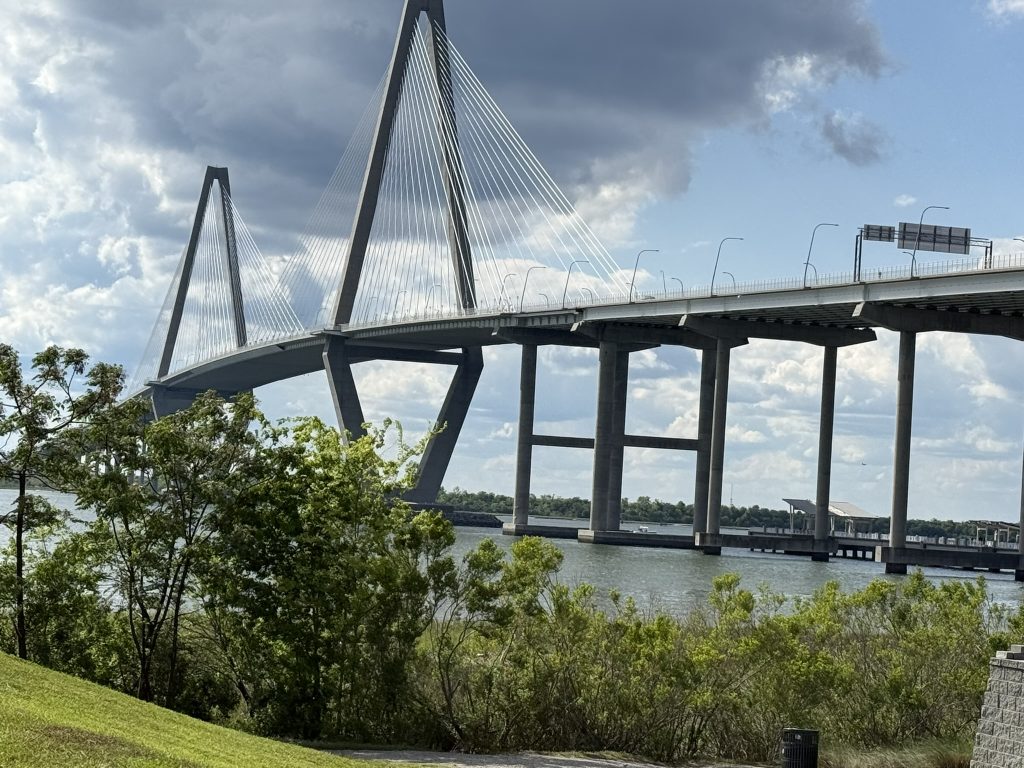
The Arthur Ravenel Jr. Bridge has a 2.5-mile pedestrian and bike lane spanning the Cooper River, with incredible sweeping views of Charleston Harbor and the downtown skyline. Many visitors are surprised to feel the bridge move a little underfoot, but that’s normal, and part of its structural integrity. Once you’re up top, you get spectacular views of both Mount Pleasant and Charleston. I especially love this walk right before sunset, when the sun is low in the sky. Wear comfortable walking shoes, since it’s a 5-mile round trip if you cross and come back.
8. Hampton Park
Where: 30 Mary Murray Dr, downtown peninsula · Hours: Daily · Cost: Free
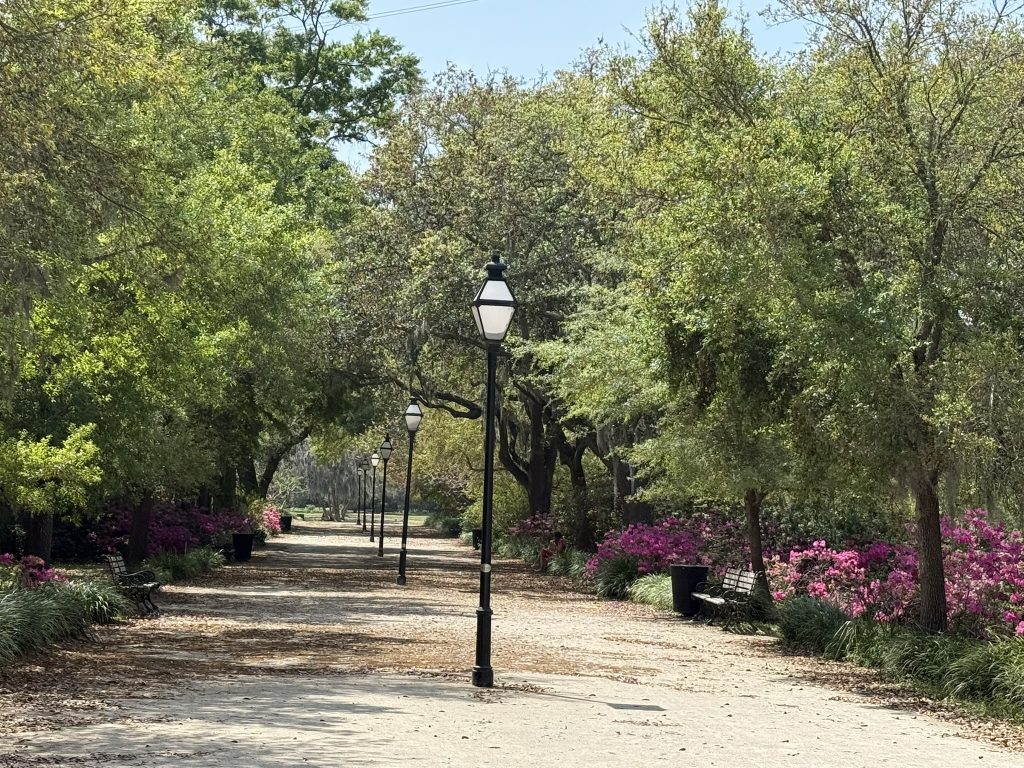
Hampton Park is the largest park on the peninsula (60 acres) and has worn many hats over the centuries incluidng; plantation land in the 1700s, a horse-racing course under the South Carolina Jockey Club in 1835, a Civil War prisoner-of-war camp, and a trade-exposition ground before becoming a city park in the early 1900s. Today you’ll find trails, water features, benches, restrooms, and photo ops at every turn.
Tip: On your way in, at the corner of Cleveland St. and Rutledge, stop by Sightsee Shop, a cute store with apparel, books, candles, skateboards, and coffee. Grab a cup to take into the park.
9. American Gardens
Where: 174 King Street, downtown · Hours: Daily; coffee cart and Music in the Park on set days · Cost: Free
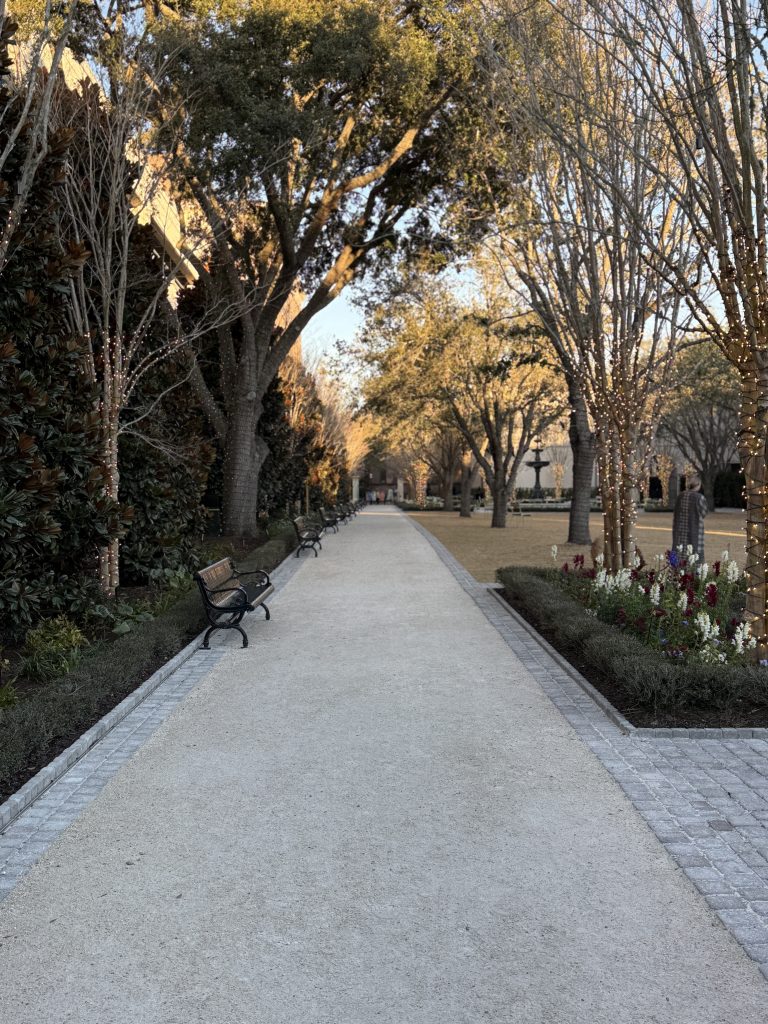
A newer, smaller green space at 174 King Street which opened in 2025. This park frequently hosts events and pop-ups, and is in the heart of the shopping district. Two of my ongoing favorites things to do in American Gardens are the coffee cart (Wed–Fri 8 a.m.–1 p.m., Sat–Sun 9 a.m.–1 p.m.) and Music in the Park (Fridays and Saturdays 3–6 p.m., Sundays 10:30 a.m.–2:30 p.m.).
10. Take a Self-Guided History Tour
Where: Starts at Waterfront Park or the City Market, downtown · Hours: Anytime · Cost: Free (audio apps free to low-cost)
Charleston is made for self-guided walking tours, and these are some of the best free walking tours in Charleston SC. A great classic route runs about 1.5 miles and start at the Pineapple Fountain in Waterfront Park, pass the pastel homes of Rainbow Row, end at the Civil War battery walls, and loop back through the historic French Quarter. A few routes to try:
- The Waterfront & Battery Walk: Trace the original colonial city walls, head south to Rainbow Row, continue to the High Battery for cannon replicas and panoramic Fort Sumter views, then loop inland through the 18th-century French Quarter.
- The Justice Journey: Developed by the Preservation Society of Charleston, this thematic deep-dive explores the city’s complex past of both oppression and resistance.
- The Gateway Walk: A serene path through hidden alleyways and historic cemeteries (including the Unitarian Church Cemetery, linked to Edgar Allan Poe) in the heart of downtown.
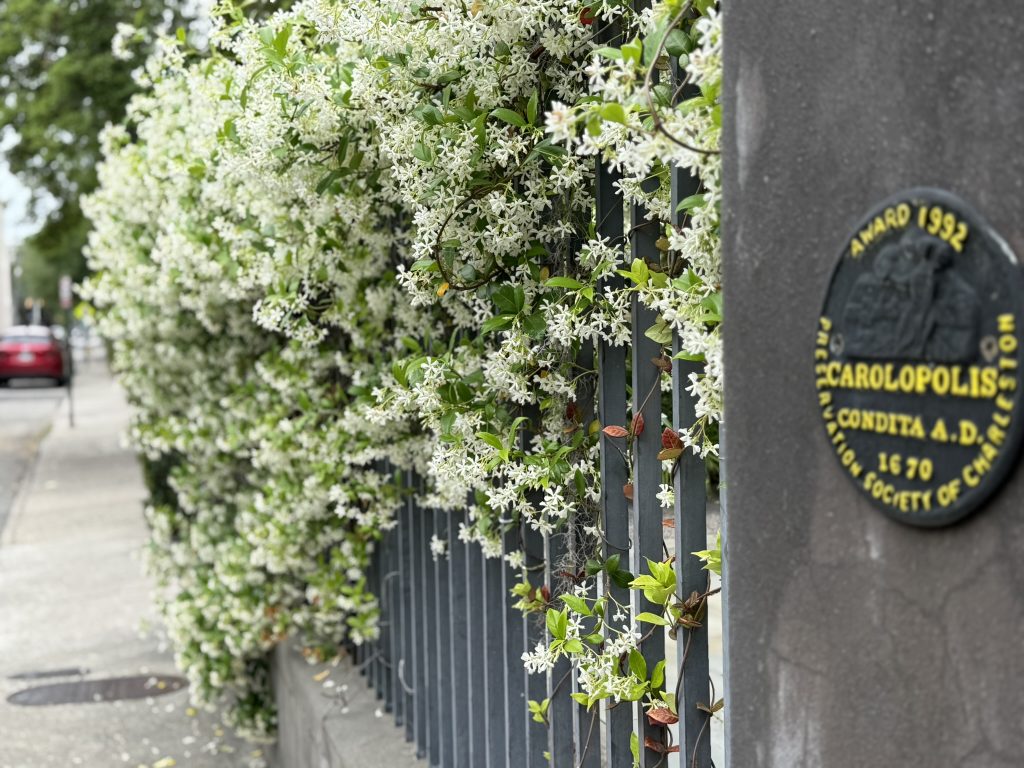
11. Wander the Old Streets and Secret Alleyways
Where: French Quarter and downtown · Hours: Anytime · Cost: Free
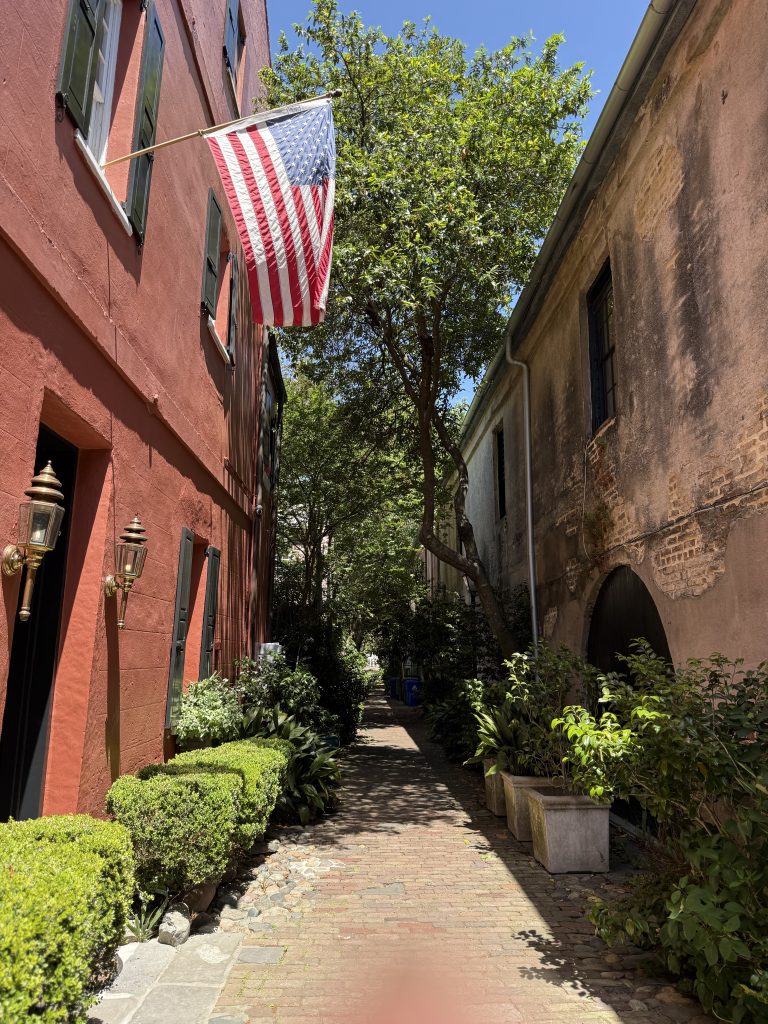
Beyond the marquee stops, half the fun of Charleston is simply getting lost in its old streets and tucked-away alleyways. For a route that hits the prettiest ones, follow along with my guide to Charleston’s hidden alleyways.
12. Visit a Farmers Market
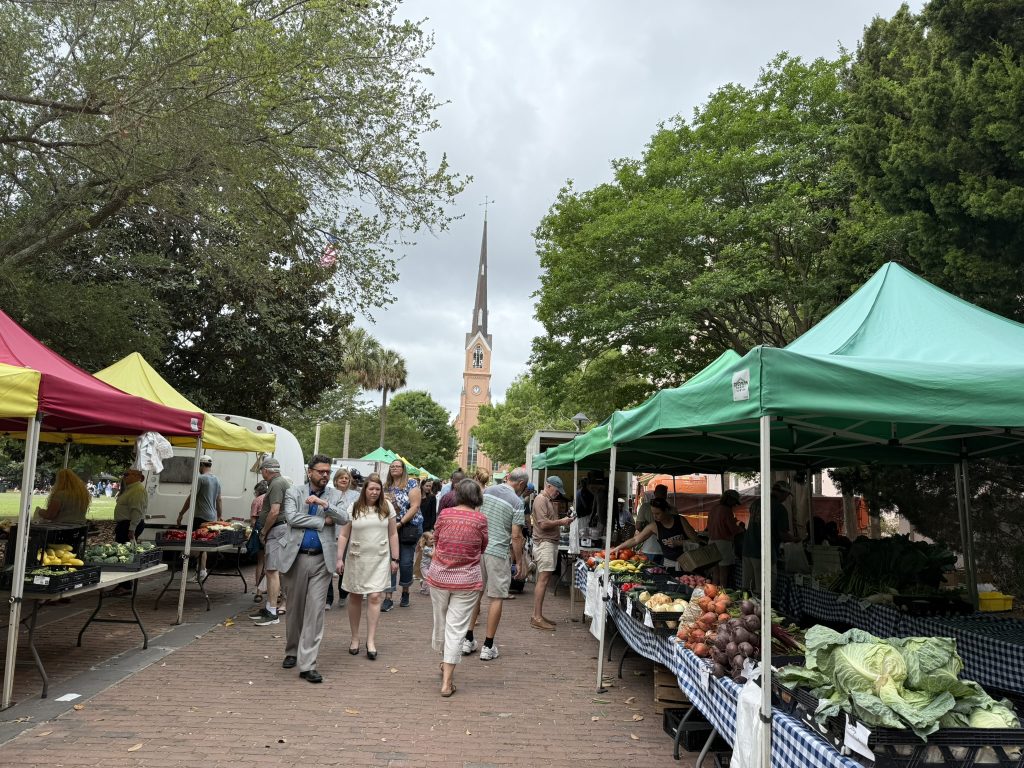
Where: Marion Square, downtown · Hours: Saturdays 8 a.m.–2 p.m., April–December · Cost: Free to enter
Downtown’s farmers market runs every Saturday, 8 a.m.-2 p.m., April through December in Marion Square, with local vendors selling produce, food, and crafts. It’s free to get in and you will only need to pay for what you buy. Several other farmers markets run on different days outside downtown.
Free Indoor Activities in Charleston
Still downtown, but a good escape from the heat or rain:
13. Avery Research Center for African American History and Culture
Where: College of Charleston, downtown · Hours: Self-guided tours at set times · Cost: Free
Part of the College of Charleston. Self-guided tours are free but offered only at certain times, so check ahead.
14. Mace Brown Museum of Natural History
Where: College of Charleston, downtown · Hours: Check the museum site · Cost: Free
Also part of the College of Charleston, this free museum holds over 3,000 fossil specimens.
15. Best Friend of Charleston Train Museum
Where: Downtown · Hours: Daily, 9 a.m.–5 p.m. · Cost: Free
Free and open 9 a.m.–5 p.m. It’s small, but a fun, quick stop.
16. Halsey Institute of Contemporary Art
Where: 161 Calhoun Street, College of Charleston, downtown · Hours: Open during exhibitions (closed between shows – check site) · Cost: Free
A free contemporary art gallery on the College of Charleston campus, the Halsey is a non-collecting museum that rotates through five to seven exhibitions a year from emerging and mid-career artists. It’s small, air-conditioned, and a great quick culture stop when you need a break from the heat. One catch: it closes between exhibitions, so check halsey.cofc.edu before you go.
One date worth flagging: Each January, the Museum Mile Month pass gives roughly a month of access to about 12 Charleston sites for $35 (adults) / $10 (kids under 12), a savings of nearly $100. A great deal if you like to museum-hop.
Free Things to Do Near Charleston, SC (Beyond Downtown)
17. Hang Out at the Beach
Where: Folly Beach, Sullivan’s Island, Isle of Palms (near Charleston) · Hours: Daily · Cost: Free (you usually pay for parking)
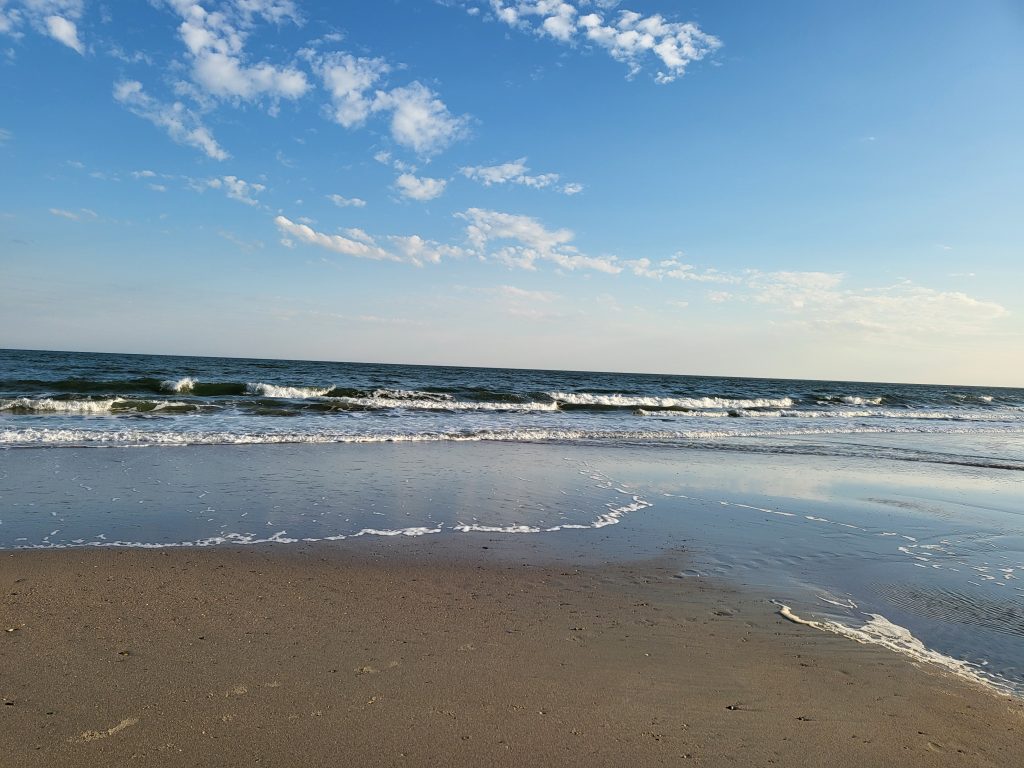
The beaches are free, though you’ll likely pay to park. Your best bet is to arrive early in the morning or late in the afternoon, both for parking and to avoid the mass crowds. The beaches are a short drive from downtown, so if you want to come and go on your own schedule, compare Charleston car rental rates here. (Not sure what to bring for sand-and-city days? See my Charleston packing list, and don’t forget reef-safe sunscreen and a beach towel.)
- Folly Beach (~20-minute drive, past James Island): Eclectic and popular with surfers, with a fishing pier and great sunsets.
- Sullivan’s Island: A little quieter, with amazing harbor views and brunch and lunch spots nearby. While you’re there, Fort Moultrie’s grounds are free to explore with self-guided info displays.
- Isle of Palms (off 0f Mount Pleasant): Picturesque and family-friendly.
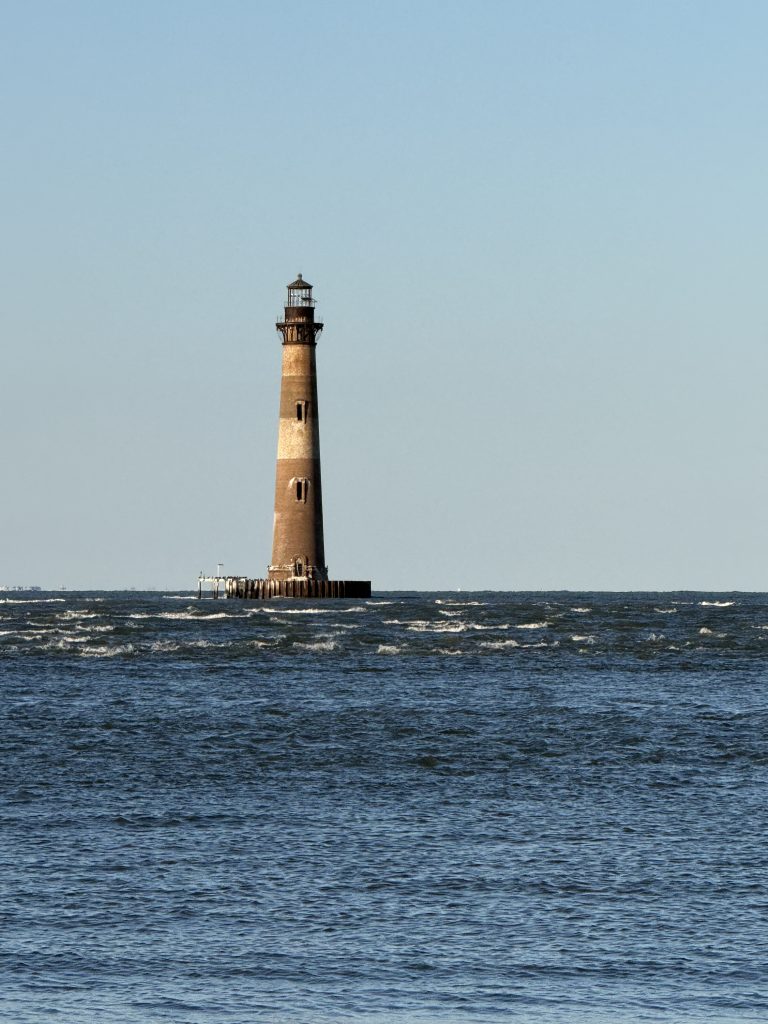
18. See the Morris Island Lighthouse for $1
Where: Lighthouse Inlet Heritage Preserve, north end of Folly Beach · Hours: Daily (low tide is best) · Cost: $1 per person
You can’t actually visit the lighthouse, but here’s how to get a great view for next to nothing:
- Location: Drive to the far northeastern end of East Ashley Avenue on Folly Beach and park near the Lighthouse Inlet Heritage Preserve.
- The walk: From the trailhead, it’s a scenic one-mile walk through maritime forest and along the beach to the viewing area.
- Cost: A small $1-per-person admission to enter the preserve (children 2 and under are free).
- Tips: Go at low tide for the best beachcombing and the widest walking area. Pets aren’t allowed, in order to protect nesting birds.
19. Pitt Street Bridge
Where: 972 Pitt St, Mount Pleasant · Hours: Open anytime · Cost: Free
This was once the route from Mount Pleasant to Sullivan’s Island. The bridge no longer crosses all the way over the water, but it’s a wonderful place to stroll, fish, or sit and look out at the marsh. It’s also a fantastic spot to watch the sunset, and one of the quieter ones I still come back to after all these years. From here, it’s about a mile up Pitt Street to the Old Village (#20).
20. Old Village, Mount Pleasant
Where: Pitt Street, Mount Pleasant · Hours: Anytime · Cost: Free
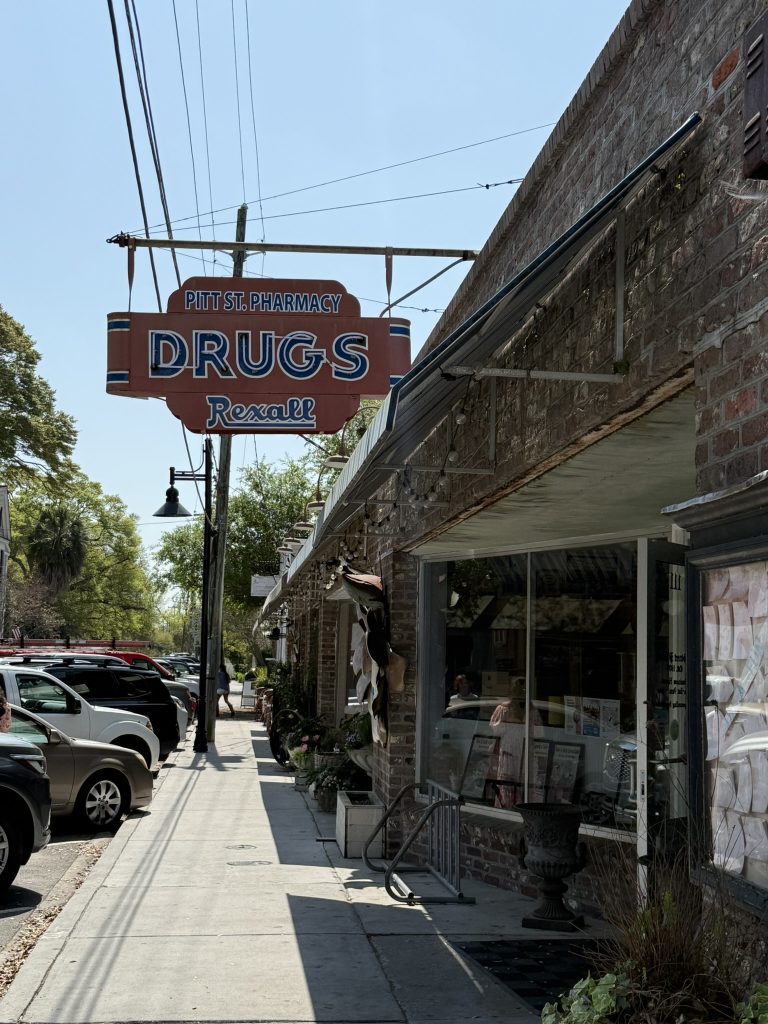
Once the original town of Mount Pleasant, the Old Village feels like a step back in time. It’s not very big, but the streets are lined with shops, a few cafes and eateries, and the large, grand old homes that make the neighborhood so charming.
21. Shem Creek Park
Where: Mount Pleasant, just across the Ravenel Bridge from downtown · Hours: Daily, 5 a.m. to midnight · Cost: Free
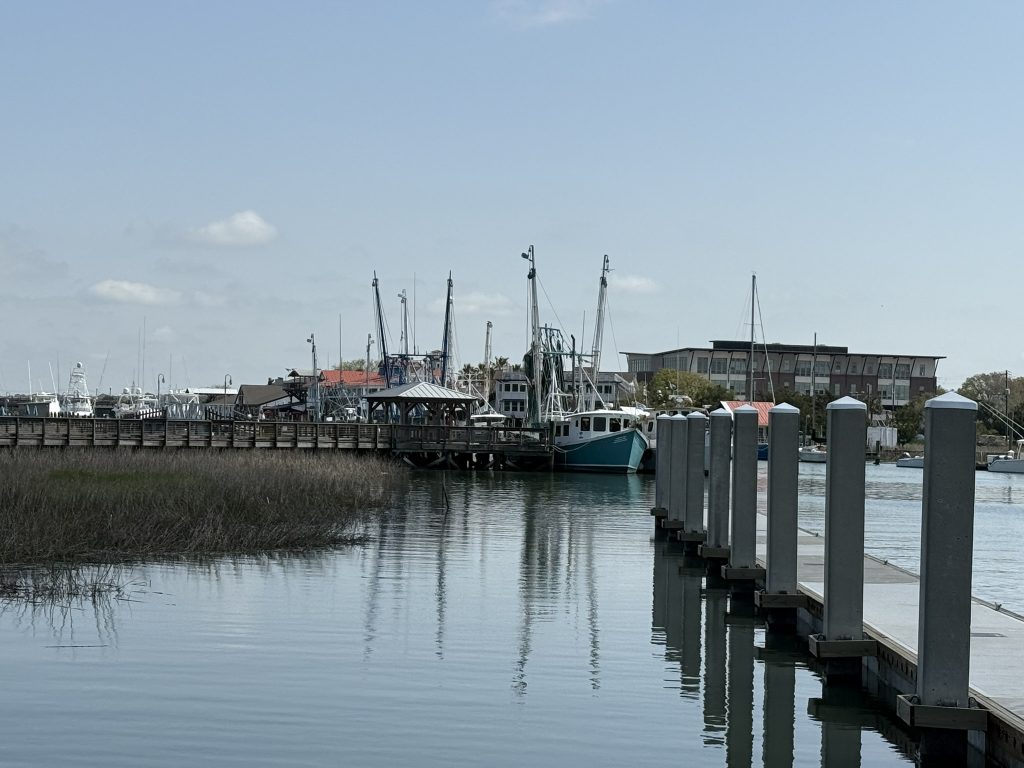
Just over the bridge in Mount Pleasant, Shem Creek Park is one of the best free spots in the area to slow down and watch everything around you. A 2,200-foot wooden boardwalk runs out over the marsh from Coleman Boulevard to near the mouth of the creek, past the working shrimp boats. It’s prime dolphin territory, so keep your eyes on the water, especially at high tide and when the shrimp boats come in, and you’ll often spot them gliding by alongside pelicans, and herons. Two heads-ups, parking is free but very limited (a 35-space lot by the restrooms plus a little spillover on Shrimp Boat Lane), so arrive early or late, and most of the boardwalk is exposed with little shade, so bring water and a hat. The creek is lined with restaurants if you want to make an evening of it On nice days you’ll see kayakers and paddleboarders out on the water. There are restrooms at the entrance, and it’s dog-friendly, as long as you keep your dog on a leash.
Free Things to Do in North Charleston, SC
Heading north, there are a few free things to do in North Charleston, SC, too:
22. Riverfront Park
Where: Off Everglades Avenue, on the old Navy Yard, North Charleston · Hours: Daily · Cost: Free
A former Navy base transformed into a waterfront park along the Cooper River, Riverfront Park is one of North Charleston’s most relaxing free spots. A long boardwalk runs along the water, with a fishing pier, scattered public art and sculptures, and big shaded lawns that are made for a slow walk or a picnic. It’s an easy detour if you’re already heading north of the peninsula, and rarely crowded compared to the downtown waterfront. Pack a picnic blanket and you can easily linger for an hour or two by the river.
23. Park Circle
Where: Park Circle neighborhood, North Charleston · Hours: Daily; farmers market Thursdays in season · Cost: Free
The hub of North Charleston’s most walkable neighborhood, Park Circle is home to one of the largest inclusive playgrounds in the area, making it a standout free stop for families. On Thursdays in season, the North Charleston Farmers Market sets up at the Park Circle Pavilion. It is free to browse and has local produce, food, and crafts. The surrounding streets are lined with locally owned cafés and restaurants if you want to grab a bite before or after. (Hours and market seasons change, so double-check before you go.)
Money-Saving Tips for Visiting Charleston
There are plenty of things to do in Charleston for free, and these small moves help stretch your budget on everything else:
- Map out your route ahead of time, then walk while you’re downtown, or use the free DASH shuttles instead of rideshares.
- Most parking meters are free between 6 p.m. and 8 a.m.
- Flying in? Compare flights to Charleston before you lock in your dates.
- Eat your big meal at lunch. Many of Charleston’s celebrated restaurants serve a similar menu midday for noticeably less, like the same she-crab soup but with a smaller check.
- Hunt for happy hour, especially the raw bar. Lowcountry happy-hour oyster and drink specials are one of the tastiest ways to sample the city for less.
- Time your trip for shoulder season. Spring is peak and priciest; you’ll generally find better hotel and flight rates in mid-summer and winter (just pack for the humidity, or the occasional cool snap).
- Graze a farmers market. The Saturday market at Marion Square (seasonal, spring through fall) is a cheap, fun way to cobble together breakfast and snacks while people-watching.
FAQ: Things to Do in Charleston SC That Are Free
Do you need a car to see Charleston’s free attractions?
No. Downtown Charleston is compact, flat, and famously walkable. Most of the free highlights sit within about a square mile of each other. You can stroll from King Street down to Waterfront Park and the Pineapple Fountain, over to the City Market, past Rainbow Row, and out to the Battery and White Point Garden without ever moving your car, and the historic peninsula was genuinely designed to be explored on foot. If you’d rather ride, the free DASH shuttles loop through downtown and connect the main visitor areas, so you can rest your feet between stops at no cost. Where a car (or a rideshare) does come in handy is for the attractions outside the historic core: the beaches at Folly, Sullivan’s Island, and Isle of Palms are a 20 to 30 minute drive, the Angel Oak on Johns Island is about 40 minutes, and the plantations sit along Ashley River Road west of town. If those are on your list, you can compare car rental rates here.
What are the best free things to do in Charleston?
Plenty. You could fill an entire trip without paying for a single attraction. If you only do one thing, take the harbor walk: start at Waterfront Park, dip your feet in the Pineapple Fountain, sway on the famous bench swings, then follow the water down to the Battery and White Point Garden, with its live oaks, Civil War cannons, and views across to Fort Sumter. It’s the easy, scenic route that links several of the city’s most iconic sights in one go, and it’s the one I take just about every out-of-town friend on. Beyond that, you can photograph the pastel houses of Rainbow Row, wander the centuries-old City Market, step inside Charleston’s historic churches (all free to enter), and walk or bike across the Arthur Ravenel Jr. Bridge for sweeping views of the harbor and skyline. None of it costs a penny, and together it adds up to a genuinely full day or two.
Are there free museums and indoor activities in Charleston?
Yes. This is handy to know when the summer heat or an afternoon thunderstorm rolls in. The Halsey Institute of Contemporary Art and the Mace Brown Museum of Natural History (home to more than 3,000 fossil specimens, from dinosaurs to cave bears) are both free and sit on the College of Charleston campus. The Postal Museum on Broad Street has free exhibits telling the city’s story through stamps and old correspondence, and the Fort Sumter Visitor Education Center at Liberty Square offers free exhibits plus a harbor-view balcony, no boat ticket required. When you just need air conditioning, you can duck into the covered Market Hall at the City Market or step inside one of Charleston’s historic churches, which are free to enter and blessedly cool. One tip worth keeping in mind, the Halsey closes between exhibitions, so check their website before you make the trip so you’re not standing at a locked door.
Are the beaches near Charleston free?
Yes. The beaches themselves are completely free, but you will usually have to pay for parking. Charleston’s three main options are Folly Beach, Sullivan’s Island, and Isle of Palms, each with its own personality, from Folly’s laid-back surf-town feel to Sullivan’s quieter, residential calm. To skip the paid lots, there are a couple of local tricks. At Sullivan’s Island, free street parking is available along many of the residential streets leading up to the bridge. Just read the signs carefully, since some blocks are restricted. At the far end of Folly Beach, you can park for free and walk about a mile out to the Morris Island Lighthouse viewpoint, one of the most photogenic spots in the Lowcountry. Arrive early on weekends and in summer, when both the lots and the free spaces fill up fast, and bring everything you need, since the free areas tend to be a walk from the nearest concessions.
Where can I park for free in Charleston?
In more places than you’d expect, if you know when and where to look. The single biggest money-saver downtown where most city parking meters are free between 6:00 p.m. and 8:00 a.m., so an evening of dinner, a stroll, and sunset over the harbor can cost you nothing to park for. During the day, you can often find free (unmetered) street parking in the residential blocks near the Battery and around the lower peninsula, though you’ll want to read every sign, as resident-only zones are common and enforcement is real. At the beaches, free street parking is available along the approach roads at Sullivan’s Island and at the far end of Folly Beach. If you do need a garage for a longer downtown day, the city-run garages are generally cheaper than the private lots. As a rule, the earlier you arrive and the farther you’re willing to walk, the better your odds of parking for free.
Are there free events, live music, or walking tours in Charleston?
Yes, and many run on a regular schedule you can plan around. On the first Friday of every month (except January and July), the First Friday Art Walks bring downtown’s galleries to life from 5:00 to 8:00 p.m., with open doors, new shows, and often a glass of wine, all free to wander. You’ll regularly catch free live music around the City Market and Marion Square, and the Citadel holds its free dress parades most Fridays during the school year, a genuinely impressive bit of pageantry. As for tours, the best free option is to go self-guided: follow a route like the Waterfront and Battery walk or the Gateway Walk that threads between historic churchyards, or use a GPS audio-tour app on your phone. If you’d rather have a guide, freetoursbyfoot.com runs pay-what-you-wish walking tours that are free to reserve, so you simply tip whatever you feel the experience was worth at the end.
What free things can you do in Charleston with kids?
Lots. Charleston is an easy city to entertain children in without spending a dime. The clear winner on a hot day is Waterfront Park, where kids can run through the splash fountains while you relax on the bench swings nearby. Hampton Park, the largest green space on the peninsula, offers wide-open lawns for running around, a pond with turtles, and gardens to explore. On Saturday mornings, the farmers market in Marion Square (seasonal, spring through fall) is full of music, samples, and people-watching that kids enjoy as much as adults. Up in North Charleston, the playground at Park Circle is one of the best in the region, a huge all-abilities playground that’s completely free. And don’t overlook the simple stuff: climbing on the cannons at White Point Garden, watching the boats from the Battery, and counting the colors of Rainbow Row all keep little ones happily occupied at no cost.
How many days do you need to see Charleston’s free attractions?
Two to three days is the sweet spot. Most of the free downtown highlights fit comfortably into two days on foot: spend the first day on the lower peninsula, walking the Battery, White Point Garden, Rainbow Row, and the waterfront, and the second exploring King Street, the City Market, the historic churches, and the College of Charleston’s free museums. That pace leaves time to actually linger (to sit on the swings at Waterfront Park or wander a churchyard) rather than rushing past everything. If you have a third day, use it to get out of the historic core: drive out to the beaches at Folly, Sullivan’s Island, or Isle of Palms, visit the free Angel Oak on Johns Island, or explore the parks up in Mount Pleasant and North Charleston. Stretch it to a long weekend and you’ll see the best of free Charleston without ever feeling like you’re hurrying.
Wrapping Things Up: Best Free(ish) Things to Do in Charleston
Charleston proves you don’t need to spend a fortune to fall for the Holy City. Between the harbor views at Waterfront Park and the Battery, the pastel facades of Rainbow Row, the steeples and shady cemeteries downtown, and the wide-open beaches just beyond the peninsula, there are far more free things to do in Charleston than most visitors expect. Add in a few “free-ish” extras, like the dollar walk to the Morris Island Lighthouse, and you can easily fill several days without straining your budget.
Lace up your comfortable shoes, start down by the water, and explore our beautiful city by foot. When you’re ready to go beyond the postcard stops, my guide to hidden gems in Charleston, SC points you to some more unique adventures in the area. Save or bookmark this guide to the best things to do in Charleston that are free so you can check spots off as you go, and if you have a favorite free thing to do in Charleston that I missed, leave it in the comments so other readers can find it too.
Looking for more free stuff in Charleston SC, or other Charleston SC things to do? These guides pair well with this one:
More Charleston guides:
- The complete Charleston travel guide (start here)
- Things to do in Charleston
- Hidden gems in Charleston, SC
- Charleston’s hidden alleyways
- Charleston itinerary for couples
- What to pack for Charleston
